Mechanical Flexible Coupling
Rokee is a manufacturer of mechanical flexible coupling from china, we can provide non-standard custom mechanical flexible coupling based on parameters or drawings supplied by customers, with export support available.
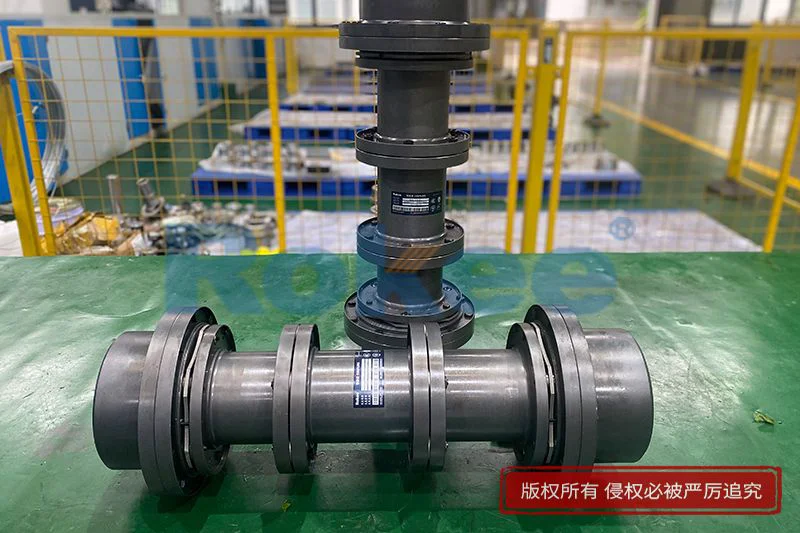
In modern mechanical transmission systems, the stable transmission of torque and rotational motion serves as the core foundation for the normal operation of all electromechanical equipment. As a key connecting component between driving shafts and driven shafts, mechanical flexible couplings have gradually become an indispensable core part of industrial transmission structures, distinguishing themselves from rigid connection structures with their unique elastic deformation performance and adaptive compensation capability. Unlike rigid couplings that require absolute coaxial alignment of connected shafts and cannot tolerate any relative displacement during operation, flexible couplings integrate structural flexibility and elastic working characteristics, enabling them to complete continuous and stable torque transmission while coping with various unavoidable mechanical deviations and dynamic loads in actual equipment operation. From precision automated processing equipment to large-scale industrial transmission devices, from high-speed rotating precision instruments to heavy-duty mechanical operation systems, mechanical flexible couplings play a vital role in ensuring transmission stability, protecting mechanical components, and extending equipment service life.
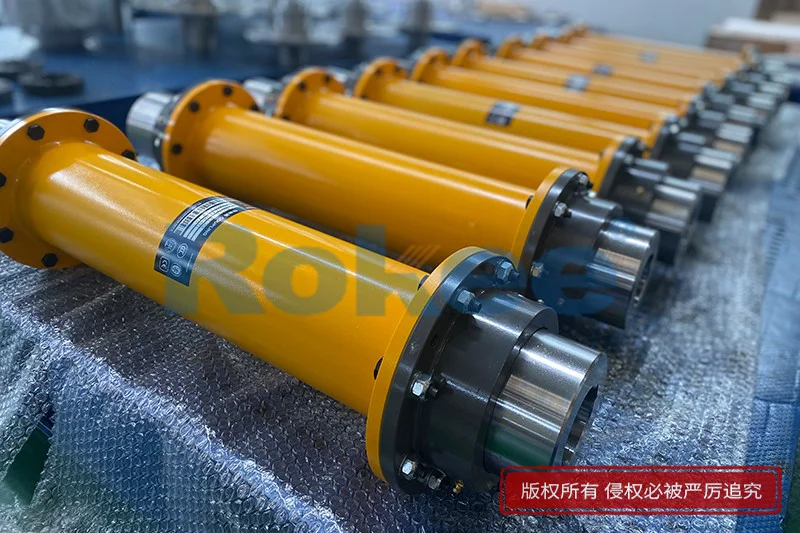
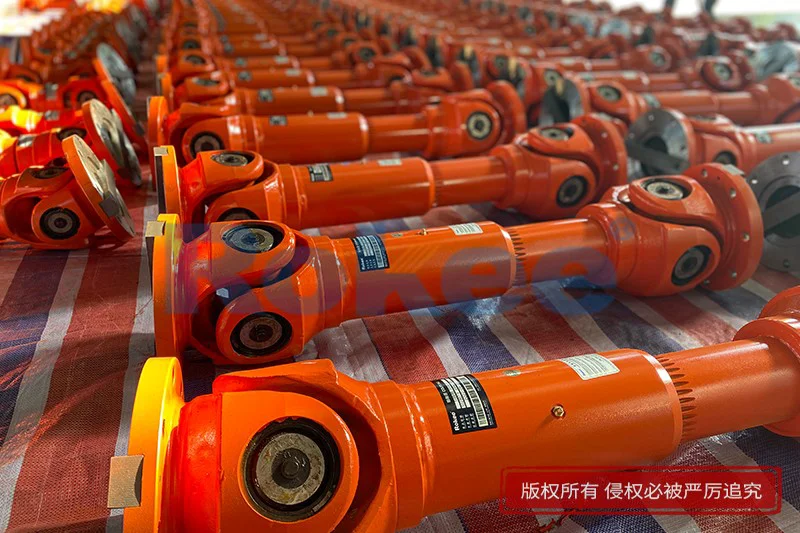
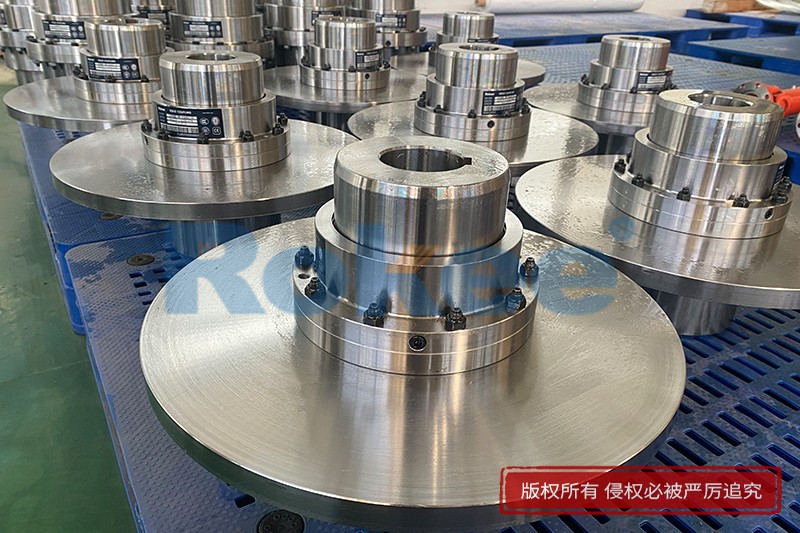
The essence of the working mechanism of mechanical flexible couplings lies in the elastic deformation of internal flexible elements. In ideal mechanical design, the driving shaft and driven shaft of transmission equipment should maintain complete coaxiality without any positional deviation. However, in actual production and operation, absolute alignment is almost impossible to achieve. Installation errors during equipment assembly, thermal expansion and contraction of metal components caused by long-term operation temperature changes, slight structural deformation of mechanical frames under long-term load, and vibration displacement generated by equipment start-stop and load mutation will all lead to different degrees of misalignment between the two connected shafts. These misalignments are mainly divided into three basic forms: angular misalignment where the two shaft axes form a certain included angle, parallel misalignment where the axes are parallel but offset radially, and axial misalignment with tiny gap changes in the axial direction. Rigid transmission structures will directly transmit the additional stress, vibration and impact caused by these misalignments to the entire transmission system, resulting in increased shaft wear, accelerated aging of bearings and gears, and even fatigue damage of key components in severe cases. Flexible couplings effectively solve this industry pain point through the elastic deformation of their internal components. When shaft misalignment occurs, the flexible elements produce reversible elastic deformation instead of rigid collision and hard friction, converting the impact force and vibration energy generated by unstable operation into elastic potential energy for temporary storage. When the equipment operation state returns to stable and the impact load disappears, the elastic elements automatically recover their original shapes, realizing continuous and buffer-free torque transmission.
Beyond the basic shaft misalignment compensation function, mechanical flexible couplings undertake multiple core protection and optimization functions for mechanical transmission systems. First of all, they have excellent vibration damping and shock absorption performance. In the working process of mechanical equipment, frequent start-stop, sudden load increase or decrease, and unstable rotation speed will generate periodic or instantaneous impact loads and vibration waves. These dynamic disturbances are extremely harmful to precision transmission systems, which will not only reduce the operation accuracy of equipment, but also cause long-term fatigue loss of mechanical structures. The flexible elements inside the coupling can effectively absorb and attenuate vibration energy and buffer instantaneous impact force, isolate the vibration transmission between the driving end and the driven end, and maintain the smooth operation of the transmission system. Secondly, flexible couplings have a reliable overload protection effect. When the equipment is overloaded or stuck accidentally, the torque exceeds the bearing range of the normal working state. The flexible structure will produce adaptive deformation or moderate torque release, avoiding the instantaneous overload torque from directly acting on motors, reducers, bearings and other precision or expensive core components. To a certain extent, it acts as a mechanical safety fuse, greatly reducing the risk of permanent damage to key equipment caused by extreme working conditions. In addition, flexible couplings can adapt to the tiny displacement changes caused by thermal expansion and cold contraction of equipment components during long-term operation, eliminating the thermal stress generated by rigid extrusion between shafts, and further improving the overall stability and durability of the mechanical system.
According to different structural forms, flexible materials and working principles, mechanical flexible couplings can be divided into two mainstream categories: elastic element flexible couplings and mechanical flexible couplings with movable structures, each with unique performance characteristics and applicable working condition scenarios. Elastic element flexible couplings rely on the elastic deformation of non-rigid elastic components to realize misalignment compensation and vibration damping, and are the most widely used type in modern industrial equipment. The elastic elements are mainly made of polyurethane, rubber, nylon and other polymer elastic materials, as well as special metal elastic parts. This type of coupling has a simple and compact overall structure, no need for lubrication during operation, low maintenance cost, and excellent buffer and damping performance. It is very suitable for equipment with frequent start-stop, variable load operation and high vibration requirements. Among them, the typical structural design of claw-type flexible couplings is composed of two metal jaw hubs and an integral elastic spider element. The torque is transmitted through the compression deformation of the elastic spider between the meshing jaws. It can adapt to angular and radial misalignment, with zero backlash transmission characteristics, and is widely used in precision servo systems, textile machinery, pump body equipment and general industrial transmission devices. Bellows flexible couplings, another high-precision type of elastic coupling, adopt thin-walled stainless steel bellows as the flexible core component. With ultra-high torsional rigidity and zero backlash performance, they can realize extremely precise rotational torque transmission, and can accurately compensate for tiny axial, angular and parallel misalignment. They are mostly applied in high-precision fields such as CNC machine tools, precision encoders and automated processing equipment that require ultra-high transmission accuracy.
Movable mechanical flexible couplings realize misalignment compensation through the relative sliding or meshing movement of internal metal components, without relying on elastic deformation of polymer materials, and are more suitable for high-torque, high-speed and harsh industrial working conditions. Gear couplings, as a typical representative of this type, transmit torque through the meshing of internal and external gears, and rely on the tooth surface gap and structural clearance to adapt to shaft misalignment. They have super high torque bearing capacity and structural rigidity, and can stably operate under heavy load and high-speed working conditions for a long time, which is widely used in large mechanical equipment such as metallurgical machinery, mining equipment and large fans. Grid couplings adopt metal grid strips to connect two coupling hubs. The grid strips produce flexible bending deformation during operation, which can buffer impact loads and absorb vibration while transmitting large torque. Compared with gear couplings, they have better vibration damping performance and stronger adaptive capacity to variable loads, and are suitable for medium and high-power transmission systems with frequent load changes. Different from elastic element couplings, movable mechanical couplings usually require regular lubrication and maintenance to reduce the wear of metal moving parts, so as to ensure long-term transmission efficiency and service life.
The performance differences of different types of flexible couplings determine their targeted application scenarios in industrial production, and the scientific selection of couplings is the key to giving full play to the performance of mechanical equipment. In precision light-load transmission scenarios represented by automated production lines, precision instruments and servo control systems, high-precision zero-backlash flexible couplings are the first choice. Such working conditions put forward strict requirements on transmission accuracy and response sensitivity, and need couplings to eliminate transmission clearance, ensure synchronous rotation of driving and driven shafts, and avoid transmission errors affecting equipment processing accuracy. In medium-load general industrial scenarios such as water pump conveying, fan operation and food machinery operation, elastic couplings with balanced damping performance, simple structure and low maintenance cost are more suitable, which can effectively cope with daily vibration and misalignment problems of conventional equipment and reduce enterprise operation and maintenance costs. In heavy-load and harsh working conditions such as mining, metallurgy, chemical industry and engineering machinery, high-rigidity metal movable flexible couplings are required to bear huge instantaneous torque and continuous heavy load, and adapt to complex working environments such as high temperature, dust and humidity, ensuring the stability and continuity of industrial production.
In addition to type matching, the service life and stable operation of mechanical flexible couplings are also closely related to installation accuracy and daily maintenance. Although flexible couplings have excellent misalignment compensation capability, excessive installation deviation will cause long-term excessive deformation of flexible elements or long-term friction of metal moving parts, resulting in accelerated aging and wear of components, increased transmission resistance, and even early failure of the coupling. Therefore, standardized installation and accurate alignment are the primary prerequisites for the normal operation of couplings. In daily equipment maintenance, regular inspection of the working state of flexible elements is required. For polymer elastic couplings, aging, cracking and permanent deformation should be checked regularly, and worn and failed elastic parts should be replaced in time to avoid reduced damping performance and transmission instability. For metal movable couplings, the lubrication state of the moving parts should be guaranteed, and lubricating oil or grease should be replenished regularly to reduce metal wear and prevent abnormal noise and vibration during operation. At the same time, during the operation of equipment, excessive overload and frequent extreme impact should be avoided as much as possible. Although flexible couplings have overload protection capability, long-term extreme load operation will exceed the adaptive range of the coupling structure, causing irreversible structural damage.
With the continuous upgrading of modern industrial manufacturing towards high precision, high efficiency and high intelligence, the technical requirements for mechanical flexible couplings are also constantly improving. Traditional couplings are gradually optimized in structural design and material performance. New high-elasticity, wear-resistant and high-temperature resistant composite materials are widely used in elastic elements, which effectively improve the service life and environmental adaptability of couplings. The optimized structural design realizes a more compact volume while ensuring torque transmission capacity, meeting the lightweight and miniaturization design needs of modern precision mechanical equipment. At the same time, with the development of intelligent monitoring technology, some optimized coupling structures can cooperate with sensor devices to realize real-time monitoring of transmission vibration, torque change and component wear state, providing data support for equipment predictive maintenance and further improving the overall operational reliability of mechanical transmission systems.
As an important auxiliary component of mechanical transmission systems, mechanical flexible couplings seem simple in structure, but bear the key responsibilities of connecting transmission components, compensating operation deviations, buffering vibration impact and protecting equipment safety. In the entire industrial mechanical system, every link of power transmission cannot be separated from the auxiliary guarantee of flexible couplings. It solves many inherent problems of rigid transmission structures, makes up for the errors and operation defects in equipment installation and operation, and greatly improves the stability, safety and service life of mechanical equipment. With the continuous progress of industrial technology and the continuous expansion of industrial application scenarios, mechanical flexible couplings will continue to complete technical iteration and performance optimization, adapt to more complex and high-standard mechanical working conditions, and provide more reliable basic support for the stable operation of modern industrial mechanical systems.
« Mechanical Flexible Coupling » Update Date: 2026/7/16
Contact
If you require custom machined couplings, please contact Rokee via the contact information below for inquiries.
Email: https://www.gshmdpq.com
 WeChat