Drum Couplings
Rokee is a manufacturer of drum couplings from china, we can provide non-standard custom drum couplings based on parameters or drawings supplied by customers, with export support available.
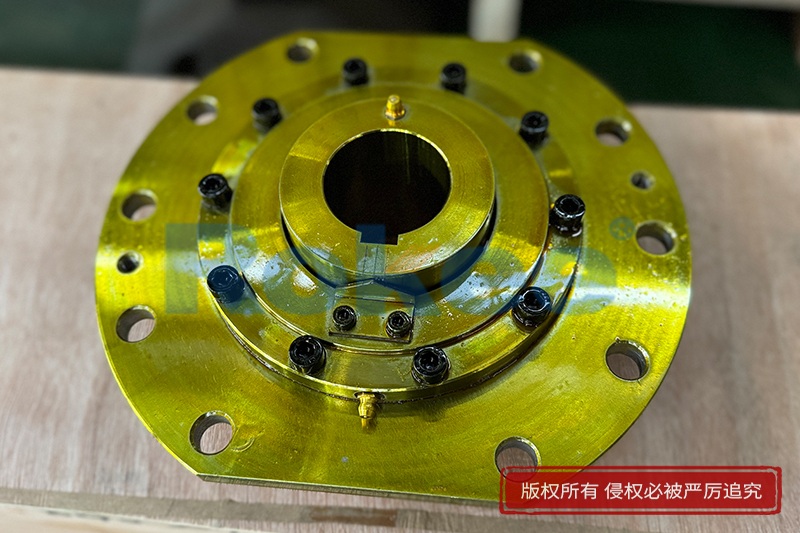
In the complex and interconnected mechanical transmission systems of modern industry, the stability, efficiency and durability of power transmission components determine the overall operating performance of mechanical equipment. As a high-performance flexible transmission component, drum coupling has become an indispensable core part of heavy-duty mechanical transmission systems by virtue of its unique structural design, excellent displacement compensation capability and strong load-bearing capacity. It undertakes the key task of connecting rotating shafts and transmitting torque in mechanical equipment, and its operating state directly affects the operating accuracy, service life and operational safety of the entire mechanical system. Different from traditional rigid couplings and ordinary flexible couplings, drum coupling integrates efficient torque transmission, multi-dimensional displacement compensation, impact load resistance and vibration damping functions, perfectly adapting to the complex and variable working conditions of modern industrial production, and is widely used in lifting, metallurgy, mining, chemical industry and other heavy industrial fields.
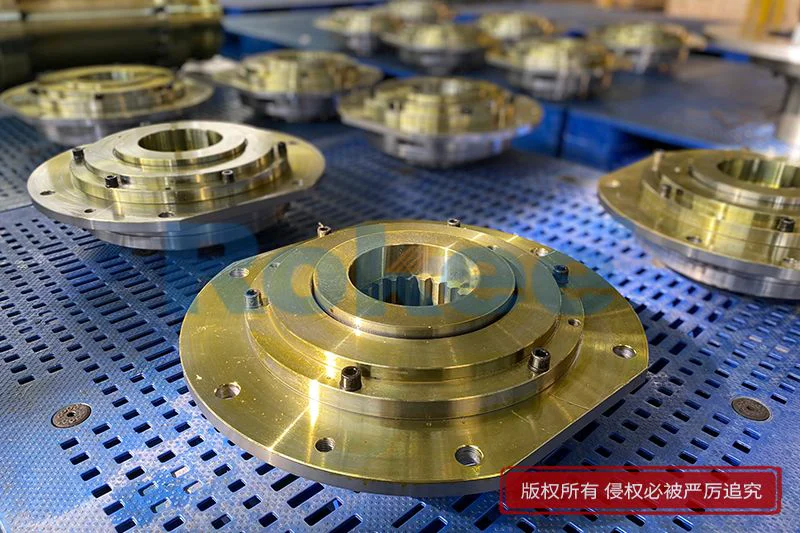
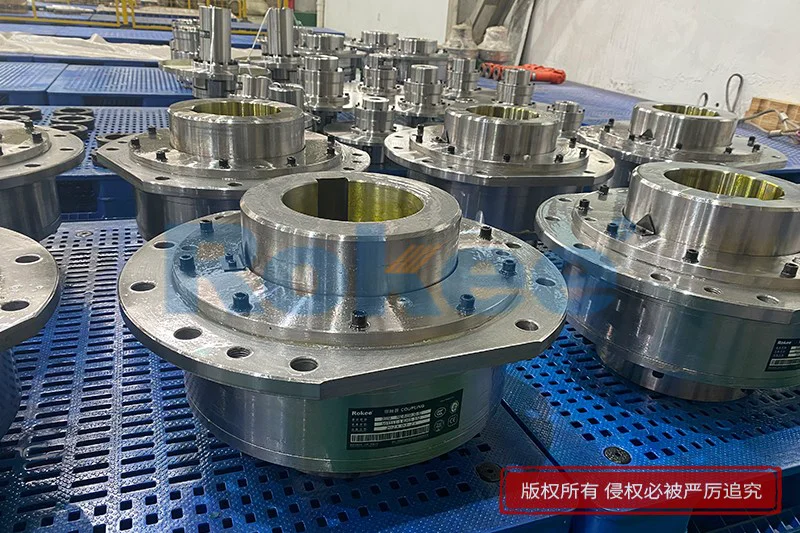
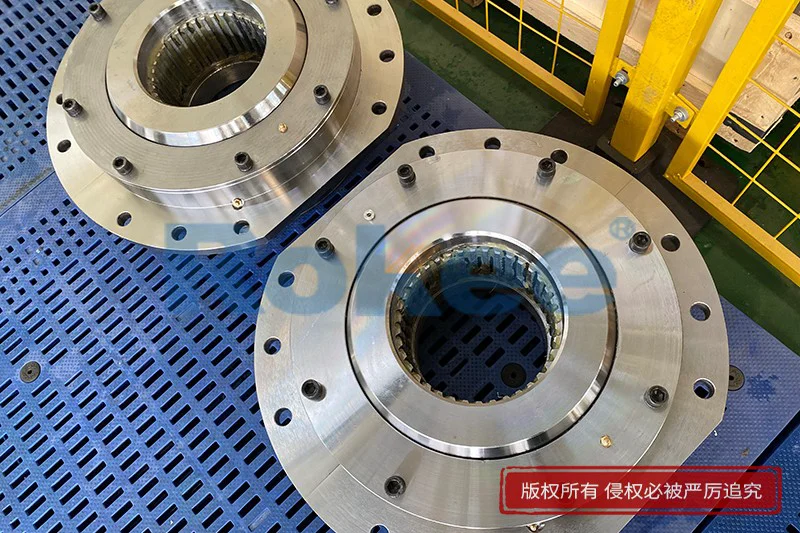
The unique working performance of drum coupling stems from its exquisite and scientific structural design. Its core transmission mechanism relies on the precise meshing of drum-shaped gear pairs and the flexible coordination of spherical matching structures, forming a stable and efficient power transmission system. The overall structure of the drum coupling is compact and reasonable without redundant components. The main components include outer gear sleeves with drum-shaped tooth profiles, inner gear rings and connecting structures. The specially optimized drum-shaped tooth profile is the key to its superior performance, which is different from the linear tooth profile of traditional straight-tooth couplings. The curved tooth surface design enables the gear pair to maintain uniform contact stress during meshing operation, avoiding local stress concentration caused by axis deviation. In the actual power transmission process, the power output by the driving equipment is transmitted to the driven shaft through the meshing cooperation of the inner and outer gears of the coupling. The spherical matching structure inside the coupling can realize flexible adaptive adjustment when the connected shafts produce position deviation, ensuring continuous and stable power transmission without mechanical jamming or power loss.
One of the most prominent advantages of drum coupling is its excellent multi-dimensional displacement compensation performance. In the long-term operation of mechanical equipment, affected by installation errors, equipment vibration, thermal expansion and contraction of components, and foundation settlement, the connected driving shaft and driven shaft are inevitably prone to angular, axial and radial misalignments. Small shaft deviation will cause additional load and friction on the transmission components, aggravate component wear, reduce transmission efficiency, and even lead to equipment failure in severe cases. The structural characteristics of drum coupling make up for the defects of traditional couplings in displacement adaptation. It can effectively compensate for angular misalignment within a certain range, and adapt to axial and radial displacement changes generated during equipment operation. When angular deviation occurs between the shafts, the drum-shaped tooth surface can produce slight relative sliding and flexible meshing, avoiding rigid extrusion between gear teeth. For axial displacement caused by equipment operation and thermal deformation, the internal matching structure of the coupling can realize free telescopic adaptation, limiting the axial movement of the drum while maintaining stable torque transmission. This all-round displacement adaptation capability greatly reduces the additional mechanical stress of the transmission system and improves the fault tolerance of equipment operation.
In terms of load-bearing performance, drum coupling shows outstanding advantages in heavy-load and impact working conditions, which is the core reason why it is widely used in heavy industrial equipment. Modern heavy machinery often faces complex load conditions such as instantaneous start impact, sudden load change and short-term overload during operation. Ordinary couplings are prone to tooth surface deformation, tooth body fracture and fatigue damage under such working conditions, which seriously affects the safe operation of equipment. The drum coupling adopts a uniform stress-bearing design. The curved tooth surface enables the contact area of gear meshing to be evenly distributed, so that the load is uniformly borne by each tooth, avoiding local overload damage. This structural feature enables it to stably transmit large torque for a long time, and can withstand instantaneous impact load and short-term overload in the stages of equipment start-up, braking and load switching. In addition, the coupling can bear large radial loads while transmitting torque, and the internal gear structure has low bending load on the tooth root, which effectively improves the overall structural strength and anti-fatigue ability, ensuring long-term stable operation under continuous heavy-load working conditions.
Vibration damping and noise reduction are also important functional characteristics of drum coupling. Mechanical equipment will inevitably produce vibration and friction impact during high-speed operation and load switching. Long-term severe vibration will accelerate the wear of shafts, bearings and other precision components, reduce the service life of equipment, and generate continuous operating noise to affect the production environment. The flexible meshing structure of drum coupling can effectively absorb and buffer the vibration and impact generated during power transmission. The relative flexible sliding between drum-shaped gear teeth can weaken the rigid collision between mechanical structures, convert part of vibration energy into internal energy consumption, and reduce the vibration amplitude of the transmission system. At the same time, the uniform meshing state avoids the eccentric friction and abnormal collision of traditional couplings, significantly reducing the operating noise of the equipment. This vibration damping and noise reduction function not only optimizes the operating environment of industrial production, but also effectively protects the precision parts of the transmission system, reducing the failure rate of equipment and the frequency of parts replacement.
The reliable performance of drum coupling is also inseparable from its excellent material performance and manufacturing technology. In order to adapt to harsh industrial working conditions such as high load, high frequency vibration and dust corrosion, the main components of drum coupling are made of high-strength alloy materials with good toughness, wear resistance and fatigue resistance. Through precise forging, heat treatment and precision machining processes, the structural strength, surface hardness and machining accuracy of the coupling are guaranteed. The strict surface treatment process enables the gear tooth surface to have excellent wear resistance and corrosion resistance, avoiding surface oxidation, corrosion and abrasive wear in long-term industrial operation. The standardized manufacturing process ensures the consistency of the structural size and performance parameters of each component, making the assembly coordination of the coupling more accurate and the operation more stable. The combination of high-quality materials and sophisticated manufacturing technology endows the drum coupling with ultra-long service life and stable performance retention ability, and can maintain excellent working state in high-intensity continuous production scenarios.
In terms of installation and later maintenance, drum coupling has obvious practical advantages compared with traditional transmission components. Its compact and integrated structural design saves installation space and is compatible with the transmission structure of most heavy-duty mechanical equipment. The assembly structure is simple and intuitive, with high installation tolerance, and can adapt to slight installation errors on the construction site, reducing the difficulty and time cost of equipment installation and debugging. In the daily operation process, the coupling has a highly stable operating state, low failure rate and basically no frequent maintenance requirements. The closed structural design can effectively block the invasion of external dust, impurities and lubricating oil pollution, reducing the wear of internal gear teeth. The regular maintenance only needs to check the lubrication state of the internal meshing parts and the tightness of the connecting structure, with low maintenance cost and simple operation process. For some improved structural designs, the coupling is also equipped with wear monitoring structures, which can timely feed back the internal wear state, facilitate staff to carry out targeted maintenance and replacement, and avoid sudden equipment shutdown caused by component failure.
Drum coupling has extremely high industrial application value and is widely applied in the core transmission links of various heavy mechanical equipment. In lifting machinery, it is used for the connecting transmission of reducer output shaft and winding drum, stably transmitting power to drive the winding and unwinding of steel wire rope, and adapting to the frequent start, braking and variable load working conditions of lifting equipment. In metallurgical and mining equipment, it bears the high-torque transmission work of heavy-duty transmission equipment, adapting to harsh working environments such as high dust, high load and frequent impact. In chemical, building materials and port machinery equipment, the stable transmission and displacement compensation performance of drum coupling can effectively cope with the mechanical vibration and axis deviation caused by long-term continuous operation, ensuring the continuous and efficient operation of the production line. In addition, in the transmission system of large fan, water pump and general heavy-duty reducer, drum coupling also shows excellent adaptive performance, effectively improving the overall operating stability of the equipment.
From the perspective of industrial economic benefits, the application of drum coupling effectively reduces the comprehensive operating cost of mechanical equipment. Its excellent durability and stability greatly reduce the frequency of equipment failure shutdown and parts replacement, improve the continuous operation rate of industrial production lines, and create stable production benefits for industrial production. The good vibration damping and protection performance can reduce the wear and damage of precision parts such as equipment shafts and bearings, extend the overall service life of mechanical equipment, and reduce the equipment investment and maintenance cost in the whole life cycle. The efficient and lossless power transmission performance improves the power transmission efficiency of the equipment, reduces the energy consumption generated in the power transmission process, and realizes energy saving and consumption reduction in industrial production. With the continuous upgrading of modern industrial equipment towards high precision, heavy load and high efficiency, the market demand for high-performance transmission components represented by drum coupling is also constantly improving.
In the future development of industrial machinery, drum coupling will further exert its technical advantages and keep pace with the development trend of intelligent and high-efficiency industrial equipment. With the continuous innovation of material technology and processing technology, the structural performance of drum coupling will be further optimized, with stronger load-bearing capacity, higher displacement compensation accuracy and longer service life. Combined with intelligent monitoring technology, the operating state, wear degree and load change of the coupling can be monitored in real time, realizing predictive maintenance of equipment and further improving the safety and intelligence level of mechanical operation. As a key basic component of mechanical transmission system, drum coupling will continue to provide stable and reliable technical support for the safe, efficient and low-consumption operation of modern heavy industrial equipment, and play an irreplaceable role in promoting the high-quality development of industrial machinery manufacturing industry.
« Drum Couplings » Update Date: 2026/7/15
Contact
If you require custom machined couplings, please contact Rokee via the contact information below for inquiries.
Email: https://www.gshmdpq.com
 WeChat