Jaw Couplings
Rokee is a manufacturer of jaw couplings from china, we can provide non-standard custom jaw couplings based on parameters or drawings supplied by customers, with export support available.
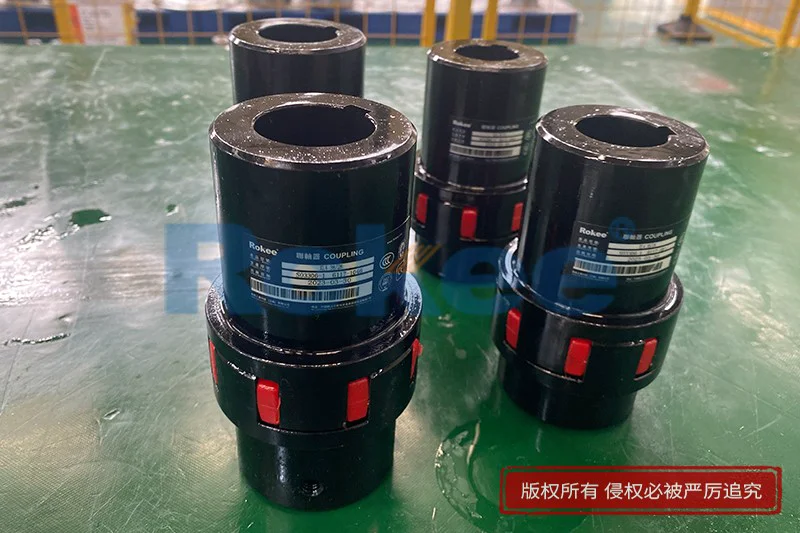
In the complex and interconnected mechanical transmission systems that underpin modern industrial production, coupling components serve as indispensable core connecting units, undertaking the critical task of torque transmission, shaft position correction, and mechanical system protection. Among numerous flexible coupling types, jaw couplings have emerged as one of the most widely adopted power transmission components due to their ingenious structural design, excellent comprehensive performance, strong environmental adaptability and low maintenance cost. Also commonly referred to as spider couplings in the industrial field, these flexible transmission devices integrate rigid mechanical transmission stability and flexible elastic buffering performance, perfectly balancing high-efficiency power output and systematic mechanical protection. They are extensively applied in light, medium and heavy-duty power transmission scenarios involving motor drive, internal combustion engine drive and various mechanical equipment linkage, becoming a foundational component to ensure the stable and safe operation of industrial transmission systems.
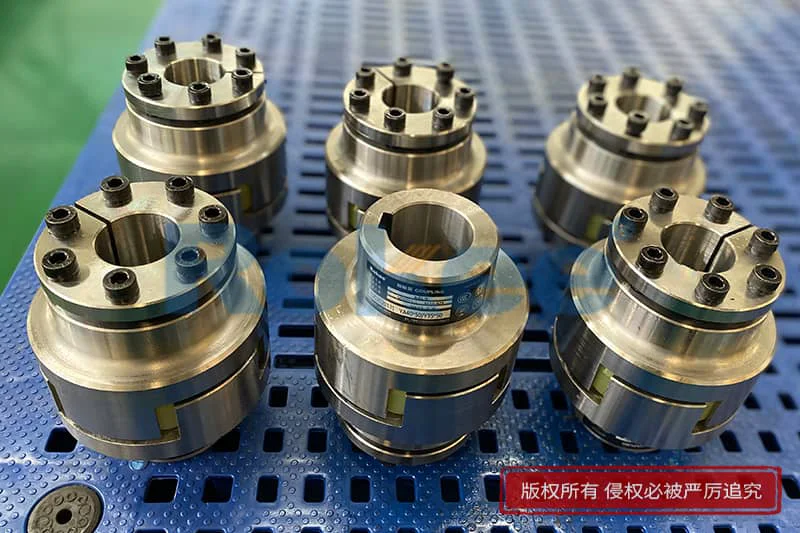
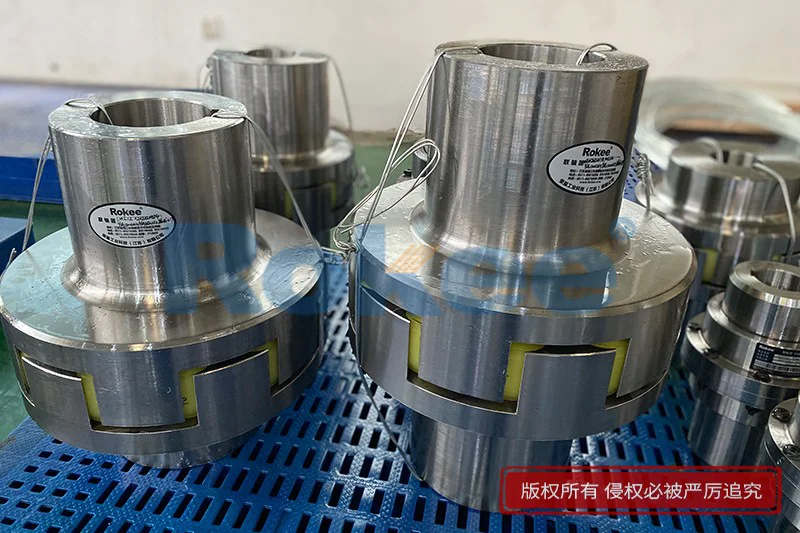
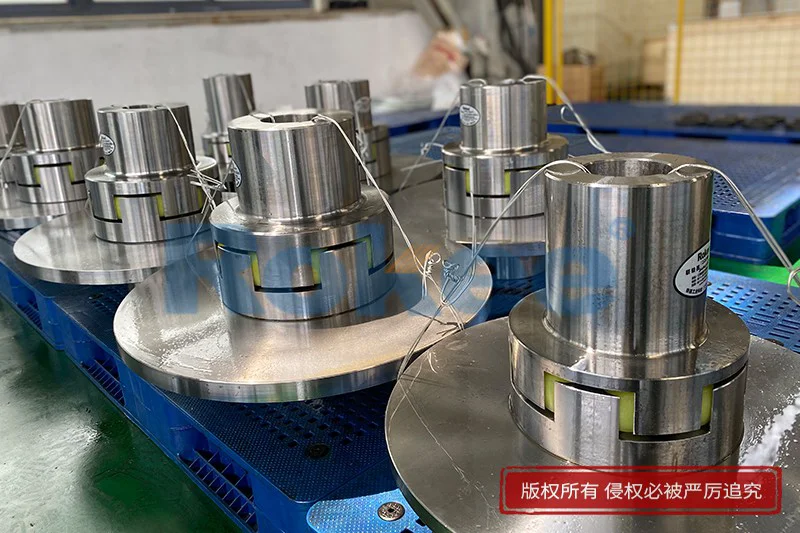
The basic structural composition of jaw couplings is simple and precise, with all core components designed for efficient transmission and reliable deformation buffering. The entire structure consists of two symmetrical metal hubs and a central elastomeric spacer element commonly known as a spider. The two metal hubs feature uniformly distributed claw-shaped structures arranged in a staggered and interlocking manner, forming a regular gap structure between the intermeshing jaws. The star-shaped or petal-shaped elastomeric spider is embedded tightly in the gaps of the interlocking jaws, completely filling the contact gaps between the driving and driven hubs and forming the only force-bearing and deformation buffer medium in the transmission process. This three-piece integrated structure abandons the complex assembly design of traditional transmission couplings, realizing ultra-compact spatial layout while ensuring transmission rigidity, which enables jaw couplings to adapt to equipment installation scenarios with limited assembly space and compact structural layout.
The working principle of jaw couplings relies on the elastic compression deformation characteristics of polymer elastomer materials and the staggered meshing transmission mode of metal jaws, achieving organic integration of rigid power transmission and flexible mechanical buffering. During equipment operation, the driving shaft drives the connected metal hub to rotate synchronously, and the claw-shaped structure on the driving hub continuously applies uniform compression force to each lobe of the embedded elastomer spider. Through the elastic deformation of the spider material, the torque is stably transmitted to the claw structure of the driven hub, thereby driving the driven shaft to rotate and completing the power transmission process. In this process, the elastomeric element does not simply act as a force transmission medium; its elastic deformation can effectively absorb the instantaneous impact load generated by equipment start-stop, load mutation and speed fluctuation. Different from rigid couplings that directly transmit all vibration and impact to the entire system, jaw couplings isolate and weaken mechanical vibration through micro elastic deformation, avoiding resonance and mechanical fatigue damage of shafts, bearings and other precision components.
One of the most prominent intrinsic advantages of jaw couplings is their unique fail-safe design, which endows the equipment with extremely high operational reliability in long-term industrial operation. When the elastomeric spider suffers aging, fatigue damage or extreme load failure due to long-term operation, the staggered metal jaws of the two hubs can still mesh with each other to continue torque transmission. Although the flexible buffering and vibration damping functions will be temporarily lost after the elastomer fails, the continuous power transmission function is still guaranteed, which effectively prevents sudden equipment shutdown, production interruption and equipment collision damage caused by coupling failure. This fail-safe characteristic is particularly critical for continuous production industrial equipment. It provides sufficient time for equipment shutdown inspection and maintenance, avoids sudden production halt losses caused by component failure, and greatly improves the safety and stability of industrial production lines.
The material selection of the elastomeric spider is the core factor determining the comprehensive performance and service life of jaw couplings, and different polymer materials endow the couplings with diverse environmental adaptability and load resistance. Common spider materials include nitrile rubber, polyurethane and high-performance thermoplastic elastomers, each with unique performance characteristics to adapt to different industrial working conditions. Nitrile rubber materials feature excellent oil resistance, wear resistance and aging resistance, with stable performance in conventional normal-temperature industrial environments, and can resist the erosion of industrial oil, dust, moisture and grease, making them suitable for most conventional mechanical transmission scenarios. Polyurethane materials have higher structural strength, better wear resistance and stronger impact resistance, which can withstand higher instantaneous impact loads and cyclic loads, suitable for medium and heavy-duty transmission scenarios with frequent load changes. High-performance thermoplastic elastomers have outstanding high-temperature resistance, low-temperature toughness and chemical corrosion resistance, maintaining stable elastic performance in extreme temperature environments and harsh corrosive working conditions, covering special industrial production scenarios that conventional rubber materials cannot adapt to.
In terms of mechanical performance compensation, jaw couplings have excellent multi-dimensional misalignment adaptation capability, which can effectively solve the transmission instability problem caused by installation errors and equipment operation deformation. In the actual installation process of mechanical equipment, it is difficult to achieve absolute coaxial alignment of the driving shaft and driven shaft, and minor angular deviation, radial deviation and axial displacement are inevitable. Long-term operation under misalignment conditions will cause eccentric wear of shafts, severe vibration of bearings and accelerated fatigue damage of transmission components. Jaw couplings can compensate for angular misalignment, parallel radial offset and axial displacement through the flexible deformation of the central elastomer, eliminating additional mechanical stress caused by shaft misalignment. This flexible compensation performance greatly reduces the assembly precision requirements of equipment, lowers the difficulty of equipment installation and debugging, and effectively extends the service life of the entire transmission system.
Compared with other types of flexible couplings, jaw couplings have obvious comprehensive advantages in structural design and application economy. Firstly, the overall structure is compact and lightweight, with small axial and radial occupied space, which is suitable for various precision mechanical equipment and miniaturized transmission systems that have strict requirements on installation space. Secondly, the assembly and disassembly process is extremely simple, without the need for complex professional tools and tedious debugging steps. The three-piece split structure enables quick replacement of vulnerable elastomer parts in daily maintenance, realizing rapid maintenance without disassembling the overall equipment transmission structure. In addition, jaw couplings require no lubrication during the entire service process, completely avoiding the equipment pollution and maintenance cost problems caused by lubricating oil filling and replacement, adapting to dust-free production, food processing, pharmaceutical manufacturing and other scenarios with high environmental cleanliness requirements. Moreover, the metal hubs of jaw couplings are usually made of high-quality alloy steel or stainless steel materials, with high structural rigidity and wear resistance, ensuring long-term stable operation of the main structure and avoiding frequent replacement of main components.
The excellent comprehensive performance enables jaw couplings to cover a wide range of industrial application scenarios, penetrating almost all fields involving mechanical power transmission. In general mechanical manufacturing, they are widely used in the transmission connection of fans, water pumps, reducers and conveyor equipment, stabilizing the power output of conventional equipment and reducing operational vibration noise. In precision automation equipment, jaw couplings are applied to servo motor transmission, precision instrument transmission and automated production line linkage, ensuring high-precision and high-stability power transmission while protecting precision transmission components from impact damage. In heavy-duty industrial fields such as metallurgy, mining and building materials production, high-strength jaw couplings with high-performance elastomer materials can withstand heavy cyclic loads and harsh working environments, adapting to high-intensity continuous operation requirements. In addition, in light industrial fields such as food processing, textile machinery and printing equipment, the oil-free, pollution-free and low-noise characteristics of jaw couplings meet the strict production environment standards of the industry, realizing safe and clean power transmission.
In terms of operational performance optimization, jaw couplings also have unique vibration damping and noise reduction capabilities, which play an important role in improving the operating environment of industrial equipment. Mechanical vibration and operational noise generated during equipment operation are important factors affecting equipment stability, service life and on-site production environment. The elastomeric spider inside the jaw coupling can absorb most of the high-frequency vibration and instantaneous impact energy generated during torque transmission, convert mechanical vibration energy into tiny elastic deformation energy and release it slowly, thereby effectively suppressing equipment vibration and reducing operational noise. This vibration damping performance not only optimizes the operating state of the transmission system, but also reduces the vibration interference of precision equipment, avoids component loosening and fatigue damage caused by long-term vibration, and improves the overall operational stability of the equipment.
Reasonable type selection and standardized installation and maintenance are key prerequisites to ensure the long-term stable operation of jaw couplings and give full play to their performance advantages. In the type selection stage, it is necessary to comprehensively consider key factors such as equipment transmission power, operating speed, load characteristics and working environment temperature. For equipment with frequent start-stop and variable load operation, elastomer materials with high impact resistance and fatigue resistance should be prioritized; for high-temperature or low-temperature extreme working environments, temperature-resistant special elastomer materials need to be selected; for corrosive working conditions, corrosion-resistant hub materials and elastomer formulas should be matched. During installation, it is necessary to ensure that the shaft installation misalignment is controlled within the allowable range of the coupling, avoiding excessive misalignment that causes excessive deformation of the elastomer and accelerates fatigue damage. In daily maintenance, regular visual inspection of the elastomer spider is required to check for aging, cracking, deformation and wear. Vulnerable elastomer parts should be replaced in a timely manner after reaching the service cycle to avoid performance degradation affecting the operating state of the entire transmission system. The metal hubs should be regularly cleaned to remove surface dust and sundries, ensuring the meshing accuracy and transmission stability of the jaw structure.
With the continuous upgrading of modern industrial equipment towards high speed, high precision and high stability, the performance requirements for transmission coupling components are constantly improving, and jaw couplings are also undergoing continuous structural optimization and material upgrading. Modern optimized jaw coupling designs adopt more uniform jaw distribution structures, making the stress distribution of the elastomer more uniform in the transmission process, avoiding local stress concentration and improving the overall fatigue resistance and service life. The continuous innovation of elastomer materials has also realized the upgrading of coupling performance, with new composite polymer materials having higher strength, better temperature adaptability and stronger fatigue resistance, further expanding the application boundary of jaw couplings. At the same time, the standardized and serialized structural design enables jaw couplings to have extremely high universality and interchangeability, meeting the matching needs of different types and specifications of mechanical equipment, and providing more convenient and reliable solutions for industrial power transmission.
In conclusion, jaw couplings have become a benchmark product in the field of flexible transmission components by virtue of their simple and reliable structure, excellent vibration damping and misalignment compensation performance, unique fail-safe design, low maintenance cost and wide environmental adaptability. They not only realize efficient and stable torque transmission for mechanical equipment, but also build a reliable safety protection barrier for the entire transmission system, effectively reducing equipment failure rate, extending equipment service life and reducing industrial production and maintenance costs. In the future industrial development process, with the continuous progress of material technology and structural design technology, jaw couplings will continue to derive more high-performance and customized products, adapt to more complex and diversified industrial transmission scenarios, and provide more solid basic support for the stable operation and efficient production of modern mechanical equipment systems.
« Jaw Couplings » Update Date: 2026/7/15
Contact
If you require custom machined couplings, please contact Rokee via the contact information below for inquiries.
Email: https://www.gshmdpq.com
 WeChat