Flexible Spider Coupling
Rokee is a manufacturer of flexible spider coupling from china, we can provide non-standard custom flexible spider coupling based on parameters or drawings supplied by customers, with export support available.
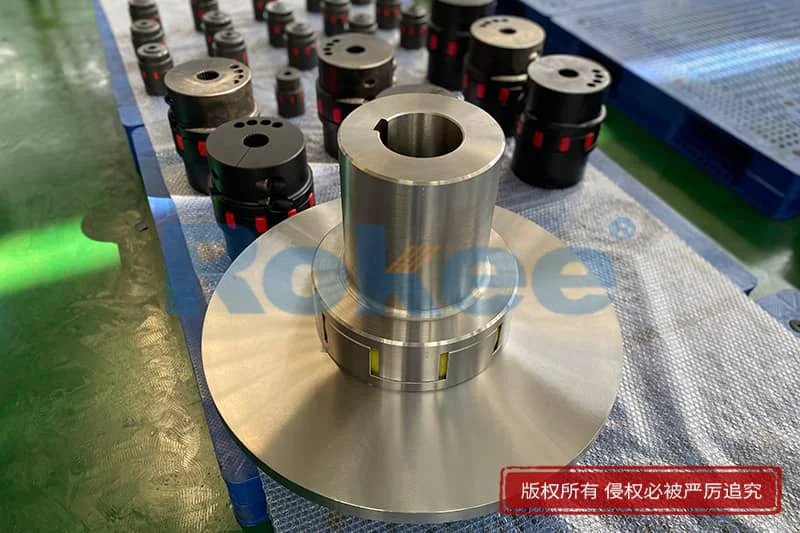
In modern mechanical transmission systems, the stability, durability and operational efficiency of power transmission components determine the overall performance of industrial equipment. Among various coupling types applied in shaft connection and torque transmission, flexible spider coupling stands out as a versatile and reliable core component, widely deployed in precision automation, traditional manufacturing, energy transmission and logistics transportation fields. As a key elastic coupling device, it effectively connects driving and driven shafts, undertakes torque transmission tasks, and resolves multiple mechanical problems caused by installation errors, operational vibration and equipment wear during long-term operation. Unlike rigid couplings that pursue absolute structural rigidity and zero displacement tolerance, flexible spider coupling relies on the elastic deformation of its core intermediate component to achieve flexible power transmission, balancing high-efficiency torque output with excellent environmental adaptability, making it an indispensable basic component in modern industrial transmission systems.
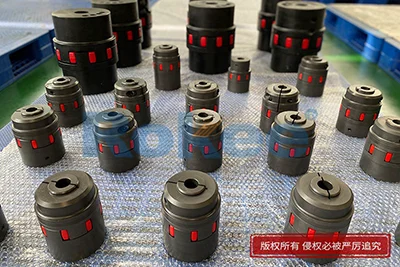
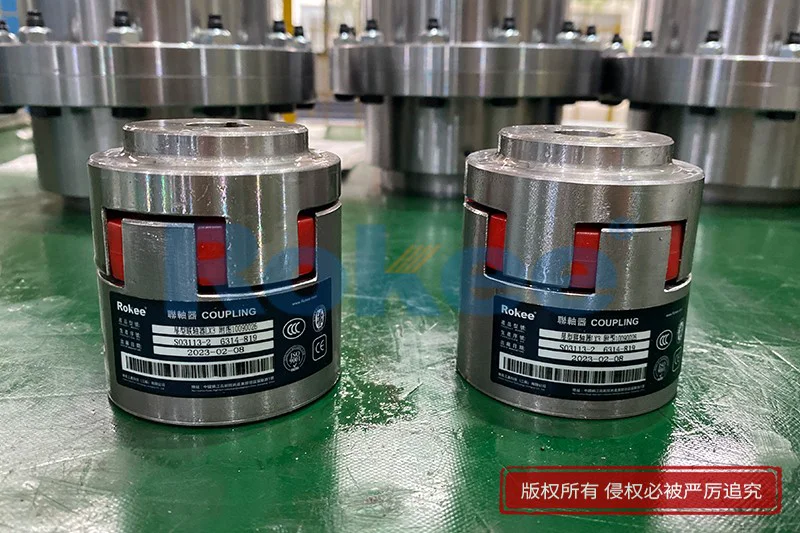
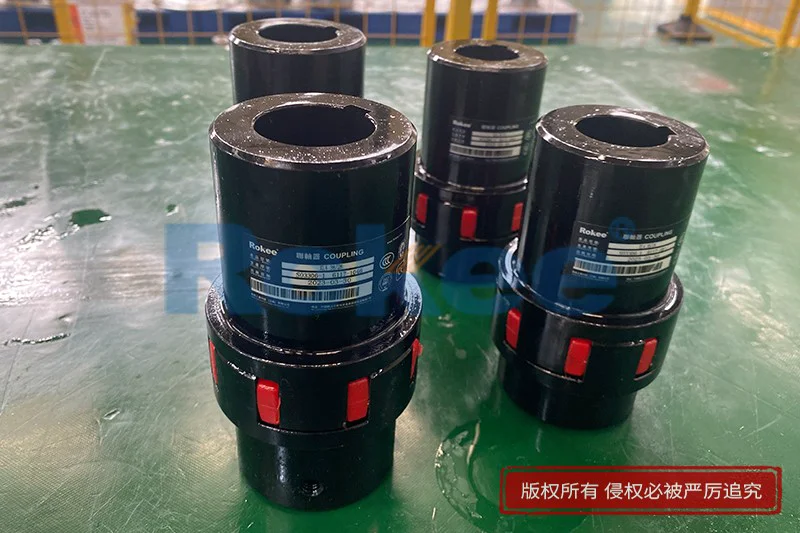
The basic structural composition of flexible spider coupling is simple and scientific, consisting of two symmetrical jaw-type hubs and an elastic spider element clamped between the hubs. The jaw hubs are usually made of high-strength metal materials with high rigidity and wear resistance, featuring evenly distributed claw structures on the inner side that mesh with the grooves of the intermediate elastic spider. The central spider element, the core flexible part of the coupling, is mostly manufactured from elastic polymer materials such as polyurethane and nylon, presenting a plum-blossom or multi-lobe structure that perfectly fits the gaps between the jaws of the two hubs. This unique nested assembly structure enables the coupling to form a complete torque transmission system without complex fastening structures or additional transmission accessories, realizing integrated connection between the driving shaft and the driven shaft. The overall compact structural design allows the coupling to adapt to narrow installation spaces of various mechanical equipment, avoiding the bulky volume and complex assembly shortcomings of traditional transmission coupling structures.
The working principle of flexible spider coupling is based on the elastic deformation characteristics of polymer materials, realizing stable torque transmission and dynamic error compensation through mechanical deformation and energy absorption. During equipment operation, the driving shaft drives the active jaw hub to rotate, and the hub jaws apply uniform extrusion force to the lobes of the intermediate elastic spider. Under torsional load, the elastic spider produces mild and reversible torsional deformation, which stably transmits rotational torque and rotational speed to the driven hub, thereby driving the synchronous operation of the driven shaft. In this process, the flexible characteristics of the elastic element play a decisive role. When there are installation deviations or operational displacement differences between the two connected shafts, the elastic spider can produce adaptive compression, stretching and tilting deformation to compensate for various misalignment errors. This flexible transmission mode fundamentally changes the rigid force transmission state of traditional couplings, avoiding rigid collision and stress concentration between shafts during operation.
One of the most prominent core performances of flexible spider coupling is its excellent multi-dimensional misalignment compensation capability, which solves the common mechanical failure problem caused by shaft misalignment in industrial equipment. In actual industrial installation and long-term operation, absolute coaxiality between driving and driven shafts is almost impossible to maintain. Processing errors of equipment parts, manual installation deviations, mechanical vibration during operation and slight deformation of the frame structure will lead to three typical misalignment states: radial misalignment, angular misalignment and axial displacement. For radial misalignment caused by lateral offset of the two shafts, the elastic spider realizes displacement compensation through uniform compression deformation of different lobes, ensuring consistent torque transmission without additional radial stress on the shaft body and bearings. For angular misalignment formed by the inclination angle between the two shafts, the relative tilting fit between the hub jaws and the elastic spider lobes adapts to the angle difference, eliminating the transmission jitter caused by angular deviation. For axial displacement generated by thermal expansion and contraction of equipment parts or long-term operational wear, the reserved assembly gap and elastic telescopic performance of the spider element can effectively absorb axial displacement, avoiding axial extrusion damage of the transmission structure. This all-round misalignment compensation performance greatly reduces the installation precision requirements of equipment, lowers the failure rate caused by shaft deviation, and improves the stability of long-term operation of mechanical systems.
In addition to misalignment compensation, outstanding vibration damping and shock absorption performance is another key advantage of flexible spider coupling, which significantly optimizes the operational environment of mechanical equipment and extends the service life of transmission components. Most industrial mechanical equipment will produce instantaneous impact load and continuous vibration during start-up, shutdown, load switching and variable-speed operation. Rigid transmission structures will directly transmit these vibrations and impact forces to the entire equipment system, resulting in accelerated wear of bearings, gears and other precision parts, increased equipment operation noise, and even fatigue damage of structural parts in severe cases. The elastic polymer material of the spider element has excellent viscoelasticity, which can convert the instantaneous impact kinetic energy and vibration energy generated during transmission into elastic potential energy for absorption and buffering. Instantaneous impact load will be evenly dispersed through the elastic deformation of the spider, avoiding local stress surge; continuous high-frequency vibration will be weakened and eliminated through the repeated elastic stretching and compression of the polymer material. This vibration damping and buffering effect not only reduces the vibration amplitude of the equipment transmission system and lowers industrial operation noise, but also effectively protects precision transmission components, reduces mechanical fatigue loss, and improves the overall operational stability of the equipment.
Flexible spider coupling also maintains reliable torque transmission efficiency while realizing flexible deformation, achieving a perfect balance between flexibility and transmission accuracy. Many flexible transmission components in the industry often have the problem of torque loss and rotational speed deviation due to excessive elastic deformation, which cannot meet the precision operation requirements of automated equipment. However, the structural design of multi-lobe uniform stress distribution of flexible spider coupling optimizes the stress transmission path. Under normal working load, the elastic deformation of the spider element is within the controllable elastic range, with no obvious torsion gap or hysteresis phenomenon, ensuring high-precision synchronous transmission of rotational speed and torque. Even in variable-load and intermittent operation scenarios, the coupling can maintain stable transmission performance without torque attenuation or transmission failure. Meanwhile, the metal jaw hubs with high structural rigidity provide stable structural support for the coupling, avoiding structural deformation and displacement of the overall coupling under high torque conditions, further ensuring the accuracy and stability of long-term power transmission.
Material performance determines the service adaptability and durability of flexible spider coupling, and the matching design of metal hubs and elastic spider elements enables it to adapt to complex and diverse industrial working conditions. The metal jaw hubs are mostly made of high-quality carbon steel or aviation-grade aluminum alloy. Carbon steel hubs feature high hardness, strong pressure resistance and good impact resistance, suitable for heavy-load and high-strength industrial operation scenarios; aluminum alloy hubs have the advantages of light weight, high precision and corrosion resistance, more applicable for precision automation equipment and high-speed light-load transmission systems. The intermediate elastic spider element is the core wearable part, and different polymer materials are selected according to working conditions to meet diverse operational needs. Polyurethane materials are the most widely used, with excellent wear resistance, oil resistance and aging resistance, good elasticity and moderate hardness, suitable for most conventional industrial scenarios. Modified nylon materials have higher temperature resistance and pressure resistance, able to maintain stable elastic performance in high-temperature and high-load working environments. Special rubber materials are applied in some low-temperature or corrosion-prone scenarios, with better low-temperature toughness and chemical corrosion resistance. This diversified material matching design enables flexible spider coupling to maintain stable performance in high-speed, heavy-load, low-temperature, oil-polluted and other harsh working environments.
In terms of industrial application scenarios, flexible spider coupling has extremely strong universality, covering almost all mechanical transmission fields that require shaft connection and flexible transmission. In industrial automation equipment such as servo motors, stepping motors and linear modules, the coupling’s high-precision transmission performance and micro-vibration damping characteristics ensure the positioning accuracy and operational stability of automated equipment, avoiding transmission errors that affect product processing precision. In fluid transmission equipment represented by water pumps and fans, it effectively absorbs the vibration generated by high-speed rotation of impellers and blades, reduces the operational noise of fluid equipment, and avoids shaft wear and bearing damage caused by long-term vibration, improving the continuous operation capacity of fluid systems.
In the field of bulk material transportation and mining machinery, including conveyor systems, crushers and screening equipment, flexible spider coupling bears frequent impact loads and variable loads. Its excellent shock absorption and misalignment compensation performance can adapt to the unstable load state of mining equipment, reduce the failure rate of transmission parts caused by impact vibration, and ensure the continuous and efficient operation of material transportation and processing equipment. In chemical, food and pharmaceutical processing machinery, the coupling’s oil-resistant, corrosion-resistant and non-pollution material characteristics meet the clean and anti-corrosion operation requirements of processing equipment, realizing safe and stable power transmission in special production environments. In addition, it is also widely used in metallurgical rolling equipment, building materials machinery, packaging machinery and other industrial fields, becoming a standard matching component of industrial transmission systems.
Compared with other types of flexible couplings in the industry, flexible spider coupling has prominent comprehensive advantages in structural design, operational performance and later maintenance. Diaphragm couplings have high precision but complex structure and high cost, with poor adaptability to impact loads; spring couplings have good flexibility but low transmission accuracy and poor structural stability; rubber sleeve couplings have simple structure but short service life and poor aging resistance. In contrast, flexible spider coupling has a simple and compact structure, low assembly difficulty and no need for complex installation debugging. It has both high transmission accuracy and excellent impact resistance and vibration damping performance, with strong adaptability to working conditions. More importantly, it is a basically maintenance-free transmission component in the whole service cycle. The elastic spider element has strong fatigue resistance and long service life under normal working conditions, without frequent lubrication, fastening adjustment and other maintenance operations, greatly reducing the daily maintenance cost and downtime loss of industrial equipment.
Reasonable selection and standardized installation are key factors to give full play to the performance of flexible spider coupling and extend its service life. In the selection process, it is necessary to comprehensively consider equipment operating parameters such as transmission torque, rotational speed, working temperature and load characteristics. For heavy-load and frequent impact operation scenarios, couplings with high-hardness elastic elements and high-strength steel hubs should be selected; for high-speed precision equipment, lightweight high-precision aluminum alloy matching structures are more suitable; for high-temperature and corrosive environments, temperature-resistant and corrosion-resistant modified elastic materials need to be prioritized. In the installation process, although the coupling has a certain misalignment compensation ability, excessive shaft deviation will still increase the deformation load of the elastic element and accelerate wear. Therefore, basic coaxiality calibration is required during installation to control the misalignment within the allowable range, so as to ensure the optimal operating state of the coupling.
With the continuous upgrading of modern industrial equipment towards high speed, high precision and high stability, the application value of flexible spider coupling is constantly highlighted and expanded. In traditional industrial manufacturing, it helps to improve equipment operational stability, reduce failure rate and maintenance cost, and improve production continuity and efficiency. In emerging precision manufacturing and intelligent equipment fields, its high-precision flexible transmission performance meets the stringent requirements of intelligent equipment for transmission accuracy and operational smoothness, providing reliable basic guarantee for the stable operation of automated production lines. While realizing efficient power transmission, it effectively protects mechanical shafts, bearings and other precision parts, reduces equipment wear loss, extends the overall service life of mechanical systems, and creates long-term economic benefits for industrial production.
In conclusion, flexible spider coupling integrates simple and reliable structural design, excellent misalignment compensation capability, efficient vibration damping and shock absorption performance and high-precision stable transmission advantages, solving many practical pain points in industrial mechanical transmission. Its strong working condition adaptability, low maintenance cost and comprehensive performance advantages make it occupy an irreplaceable position in the field of industrial couplings. With the continuous progress of material technology and mechanical design technology, the performance of flexible spider coupling will be further optimized, and its application scope will be more extensive, providing more reliable basic support for the high-quality development of modern industrial transmission systems.
« Flexible Spider Coupling » Update Date: 2026/7/16
Contact
If you require custom machined couplings, please contact Rokee via the contact information below for inquiries.
Email: https://www.gshmdpq.com
 WeChat