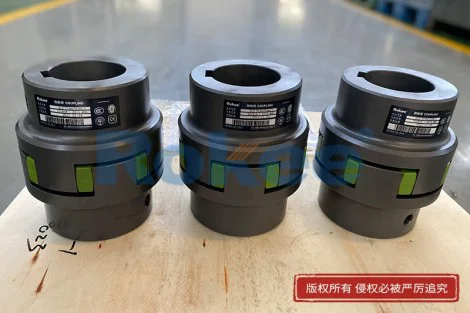
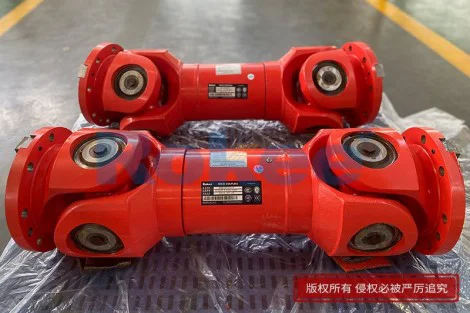
Turbine Couplings
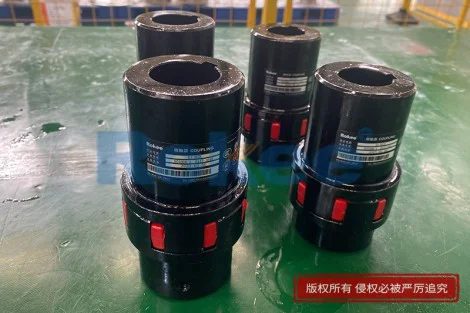
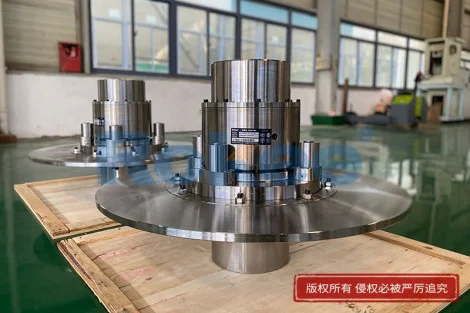
Rokee is a manufacturer of turbine couplings from china, we can provide non-standard custom turbine couplings based on parameters or drawings supplied by customers, with export support available.
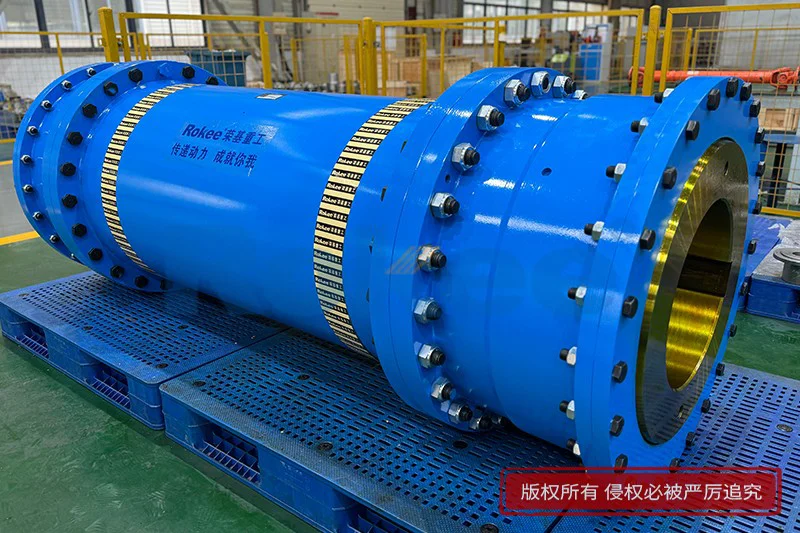
As an indispensable core component of rotating power transmission systems, turbine coupling serves as the critical connecting medium between turbine rotors and matched power generation or transmission equipment, undertaking the core task of stable torque transmission in high-speed and high-load operating environments. In the entire power conversion process of turbine equipment, mechanical energy generated by fluid-driven rotor rotation cannot be efficiently transmitted to subsequent operating units without the precise coordination and buffering protection of couplings. Although often regarded as a simple connecting part in mechanical structures, turbine coupling directly determines the overall operating stability, energy transmission efficiency and service life of the entire turbine system, and its structural design, operating performance and maintenance state are closely related to the safe and economic operation of large rotating mechanical equipment. Different from ordinary mechanical couplings used in low-speed and low-load scenarios, turbine couplings are specially optimized to adapt to extreme working conditions such as high rotating speed, large torque fluctuation, frequent thermal deformation and complex vibration impact, forming unique structural characteristics and operating mechanisms that distinguish them from conventional transmission components.
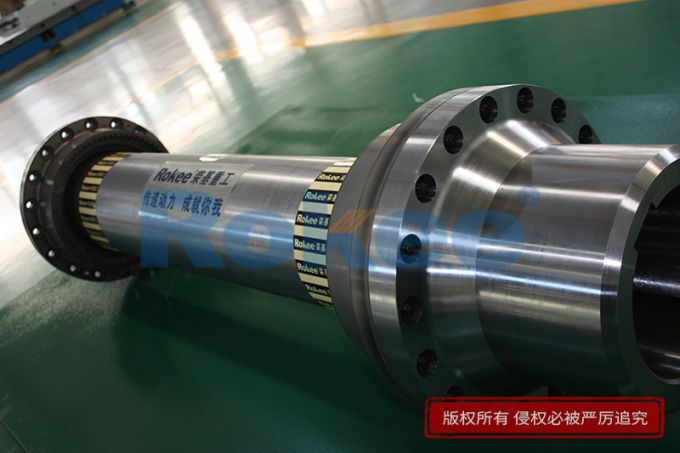
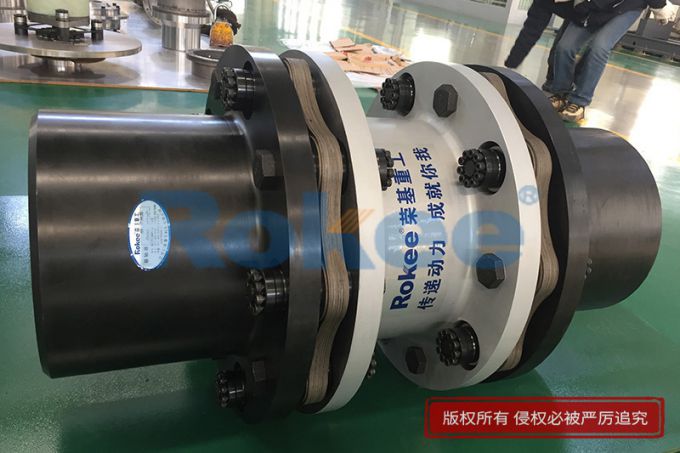
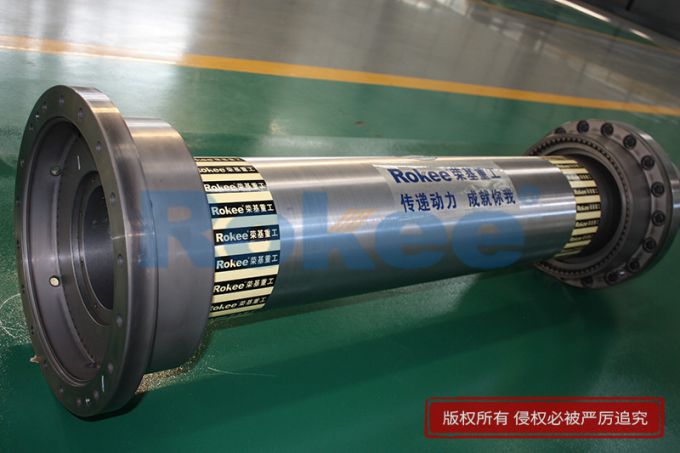
The most fundamental functional attribute of turbine coupling is to realize rigid and flexible integrated power transmission between two independent rotating shafts. In the assembly structure of turbine equipment, the rotor shaft and the shaft of the matched working unit are two relatively independent mechanical structures with separate processing and assembly benchmarks. During the equipment operation cycle, the coupling stably transmits the continuous torque generated by turbine rotation to the driven shaft system, ensuring the synchronous and coordinated operation of the entire rotating system and realizing the continuous conversion and output of mechanical energy. Beyond basic power transmission, the core value of turbine coupling is reflected in its adaptive compensation capability for various assembly and operation deviations. In the process of equipment installation and commissioning, it is difficult to achieve absolute coaxial alignment of the two connecting shafts due to processing tolerances of mechanical parts, foundation installation errors and assembly operation deviations. During long-term operation, factors such as unit load changes, ambient temperature fluctuation and structural stress release will cause slight displacement and angle deviation between the two shafts. The turbine coupling can effectively absorb and compensate these tiny misalignments through its flexible structural design, avoiding additional bending stress and shear stress concentration at the shaft connection, which would otherwise cause shaft deformation, bearing wear and even structural fatigue damage.
Thermal deformation compensation is one of the most critical performance advantages of turbine couplings in actual operation. Turbine equipment will generate a large amount of heat energy during the energy conversion process, and the long-term high-temperature operating environment will cause thermal expansion and contraction of rotor shafts, casings and foundation structures. The linear expansion and displacement difference of different structural parts under temperature changes will further aggravate the shaft misalignment state. Reasonably designed turbine couplings can adapt to axial, radial and angular displacement changes caused by thermal deformation through their internal flexible components, maintaining the stable connection of the shaft system without generating additional restraint stress. This adaptive thermal compensation performance fundamentally avoids the failure risks such as shaft jamming, coupling cracking and bearing ablation caused by thermal stress, and provides a reliable structural guarantee for the long-term continuous operation of turbine equipment under variable temperature working conditions.
Vibration buffering and impact absorption are also important functional characteristics that turbine couplings must possess. The turbine system will inevitably produce periodic vibration during high-speed rotation, and instantaneous impact load will be generated during equipment start-up, shutdown, load sudden change and operating condition switching. These vibration impacts will be transmitted along the shaft system, easily causing resonance of the entire mechanical structure, accelerating the wear of precision components such as bearings and gears, and even affecting the operating accuracy of the equipment. The flexible structure inside the turbine coupling can effectively dissipate vibration energy and buffer instantaneous impact force, isolate the mutual transmission of vibration between the driving shaft and the driven shaft, reduce the overall vibration amplitude of the unit, and maintain the smooth operation of the rotating system. At the same time, this vibration damping performance can effectively reduce the operating noise of the equipment and improve the working stability of the entire power transmission system.
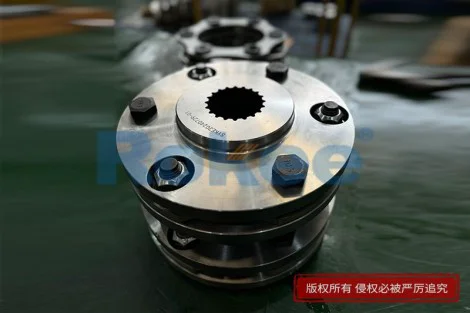
In terms of structural types, turbine couplings are mainly divided into flexible mechanical couplings and fluid couplings according to different transmission principles and structural forms, and different types of couplings have their own applicable working scenarios and performance characteristics. Flexible mechanical couplings rely on elastic deformation of metal or non-metal flexible components to realize torque transmission and deviation compensation. The typical structural form is the disc coupling with laminated plate structure. This kind of coupling uses multiple groups of high-precision metal laminated plates as the flexible transmission medium. The laminated plates can produce micro elastic deformation under load, which not only ensures rigid and efficient torque transmission under rated operating conditions, but also accurately compensates various tiny misalignments of the shaft system. The all-metal structural design enables it to adapt to high-temperature and high-speed operating environments, with excellent structural rigidity and fatigue resistance, and is widely used in various medium and large-scale turbine power transmission systems. The structural characteristics of multi-group laminated plate superposition enable the coupling to uniformly disperse structural stress during operation, avoid local stress concentration, and greatly improve the service life and operating reliability of the product.
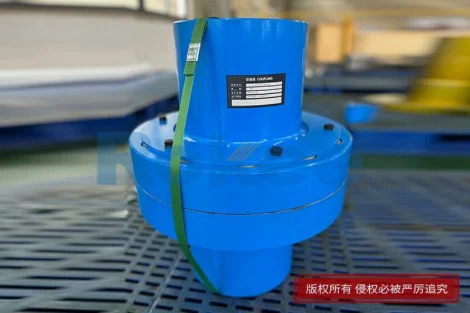
Fluid couplings rely on liquid kinetic energy conversion to realize non-contact torque transmission, with outstanding buffering and overload protection performance. Its internal structure is composed of a pump wheel and a turbine wheel which are independent of each other and sealed in a closed shell filled with working fluid. When the driving shaft drives the pump wheel to rotate, the pump wheel accelerates the internal working fluid to form high-speed circulating liquid flow, converting mechanical energy into fluid kinetic energy; the high-speed fluid impacts the turbine wheel to drive the driven shaft to rotate, realizing the reverse conversion of fluid kinetic energy to mechanical energy and completing the power transmission process. The fluid transmission mode makes the torque transmission process soft and smooth, without rigid mechanical impact, which can realize stepless speed regulation and flexible start-up of the equipment. During the start-up stage of the turbine unit, the fluid coupling can slowly increase the output torque, avoid the instantaneous impact current and mechanical shock caused by direct full-load start-up, and protect the turbine rotor and prime mover structure from impact damage. When the equipment is overloaded, the internal fluid will slip dynamically, automatically limiting the transmission torque and realizing passive overload protection for the entire transmission system.
The operating efficiency of turbine couplings is a key index affecting the overall energy utilization rate of the unit. In the rated stable operating state, high-quality turbine couplings can maintain extremely low energy loss, realizing efficient transmission of mechanical energy. For flexible mechanical couplings, the energy loss mainly comes from the tiny elastic deformation of flexible components and the slight friction between matching parts, and the overall transmission efficiency remains at a high level under long-term stable operation. For fluid couplings, the transmission efficiency is affected by the operating speed difference between the pump wheel and the turbine wheel. There is inevitable slight fluid slip in the working process, but under nominal load and stable speed conditions, the slip rate is extremely low, which can still meet the high-efficiency operation requirements of turbine equipment. In actual operation, the matching degree between coupling performance and unit operating conditions directly affects the energy-saving effect of the equipment. Reasonable type selection and parameter matching can effectively reduce invalid energy consumption in the power transmission process and improve the overall operating economy of the turbine system.
The installation accuracy of turbine coupling is the primary prerequisite to ensure its excellent performance. Although the coupling itself has deviation compensation capability, excessive installation misalignment will exceed its adaptive range, resulting in increased operating load, aggravated component wear and reduced transmission efficiency. In the installation and commissioning process, it is necessary to carry out precise coaxial calibration of the driving and driven shafts through professional testing tools, strictly control the axial clearance, radial runout and angular deviation of the coupling connection part, and ensure that all installation parameters are within the optimal matching range. After the completion of installation and calibration, it is necessary to conduct no-load trial operation and graded load test operation to observe the operating vibration, temperature rise and rotation stability of the coupling, eliminate hidden dangers such as unbalanced stress and abnormal friction caused by installation deviations, and ensure that the coupling can give full play to its compensation, vibration damping and efficient transmission functions in formal operation.
Long-term stable operation of turbine couplings depends on standardized daily maintenance and regular condition monitoring. In the daily operating process, it is necessary to regularly monitor the surface temperature, vibration state and operating sound of the coupling. Abnormal temperature rise often indicates excessive friction, overload operation or poor lubrication of internal components; sudden increase in vibration amplitude or abnormal impact sound usually means shaft misalignment exceeding the standard, fatigue damage of flexible components or internal fluid failure of fluid couplings. For mechanical couplings, regular cleaning of dust and dirt on the surface, inspection of the fatigue deformation, cracking and loosening of laminated plates or elastic components, and fastening of connecting bolts are required to avoid structural failure caused by component aging and loose assembly. For fluid couplings, it is necessary to regularly check the tightness of the sealing structure, replenish and replace the working fluid according to the operating cycle, clean internal impurities, and prevent transmission efficiency reduction and component wear caused by fluid deterioration, leakage and impurity accumulation.
Common failure forms of turbine couplings in operation include component fatigue damage, sealing failure, transmission efficiency attenuation and abnormal vibration. Fatigue failure mostly occurs in flexible components of mechanical couplings. Long-term alternating load and vibration impact will cause micro-fatigue cracks on the surface of laminated plates or elastic parts, which will gradually expand with the extension of operating time, eventually leading to component failure and affecting the power transmission stability. Sealing failure is a common fault of fluid couplings. Aging and wear of sealing elements will cause working fluid leakage, resulting in insufficient internal fluid volume, increased slip rate, reduced transmission torque and even failure of power transmission. Long-term operation without maintenance will also lead to deposition of impurities in the fluid, aggravating internal component wear and further reducing the operating performance of the coupling. Abnormal vibration faults are mostly caused by excessive shaft misalignment, unbalanced coupling rotation or component deformation, which will form vicious vibration circulation, accelerate equipment aging, and may induce major faults such as shaft system damage in severe cases.
With the continuous upgrading of turbine equipment towards high power, high speed and high intelligence, the design and manufacturing technology of turbine couplings is also constantly optimized and innovated. Modern turbine couplings adopt high-strength and fatigue-resistant new materials to improve the structural durability and high-temperature adaptability of products, and optimize the internal structural layout through finite element simulation analysis to make the stress distribution more uniform and the deviation compensation range more accurate. At the same time, the intelligent monitoring technology is gradually applied to the coupling operation management. By arranging vibration, temperature and displacement sensing elements, the real-time operating state of the coupling can be dynamically monitored, and early warning of potential faults can be realized, which greatly improves the predictive maintenance capability and operating safety level of the equipment. The optimized design of coupling structure also further reduces operating energy loss, adapts to the higher energy-saving and efficient operation requirements of modern turbine units, and provides more reliable technical support for the stable and economic operation of power transmission systems.
In the entire mechanical transmission system of turbine equipment, the coupling is a small but vital key component. It bears the important mission of connecting power transmission, compensating operating deviations, buffering vibration impact and protecting equipment safety. Its performance stability is related to the operating safety of the entire unit, and its service life affects the overall operation cycle and maintenance cost of the equipment. In the actual equipment operation and management process, scientific type selection, standardized installation, refined maintenance and intelligent monitoring are essential to give full play to the performance advantages of turbine couplings, reduce equipment failure rate, extend the service life of rotating machinery, and realize the long-term stable and efficient operation of turbine power transmission systems. With the continuous development of mechanical manufacturing and intelligent operation and maintenance technology, turbine couplings will continue to iterate and upgrade in structural design, material performance and monitoring means, and play a more core supporting role in the field of high-end rotating power equipment.
« Turbine Couplings » Update Date: 2026/7/17
Contact
If you require custom machined couplings, please contact Rokee via the contact information below for inquiries.
Email: https://www.gshmdpq.com
 WeChat