Flexible Spider Shaft Coupling
Rokee is a manufacturer of flexible spider shaft coupling from china, we can provide non-standard custom flexible spider shaft coupling based on parameters or drawings supplied by customers, with export support available.
In modern mechanical transmission systems, the stable connection between rotating shafts is the fundamental guarantee for continuous and efficient operation of equipment. As a core flexible transmission component, flexible spider shaft coupling has become one of the most widely used connecting parts in industrial machinery due to its ingenious structural design, excellent comprehensive performance and strong environmental adaptability. It perfectly solves multiple pain points in traditional rigid shaft connection, including rigid impact during operation, poor tolerance to shaft misalignment, and easy damage to transmission components. Different from rigid couplings that pursue absolute structural rigidity and precise alignment, flexible spider shaft couplings take the balance of transmission stability, deformation compensation and vibration reduction as the core design concept, realizing efficient and safe torque transmission under complex and variable working conditions. This component is widely embedded in various power transmission equipment, serving as a flexible bridge between driving and driven shafts, and plays an irreplaceable role in protecting mechanical equipment, reducing operating noise and extending the service life of transmission systems.
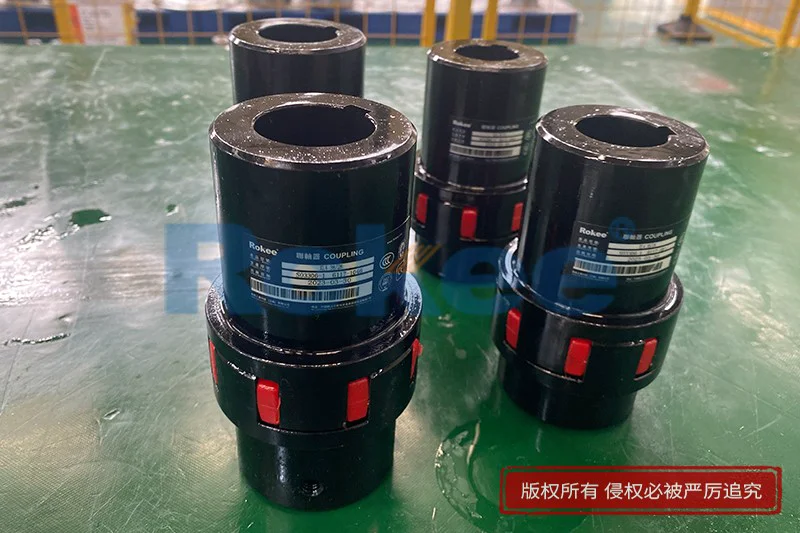
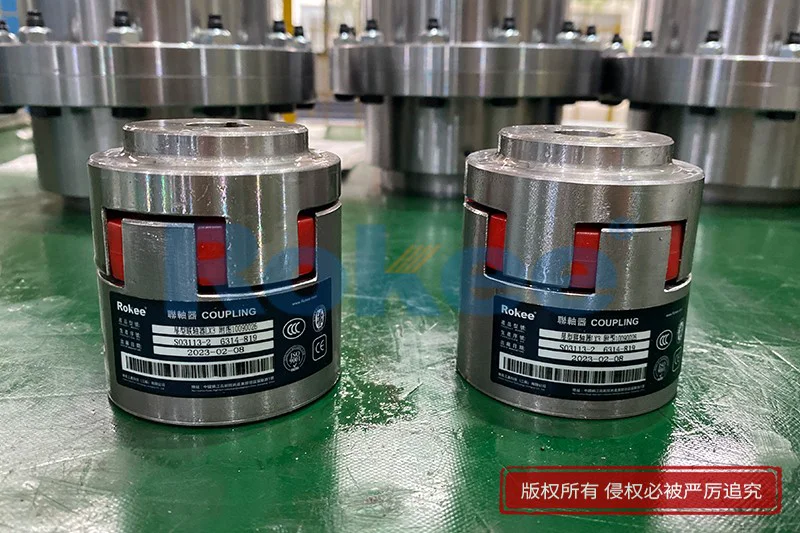
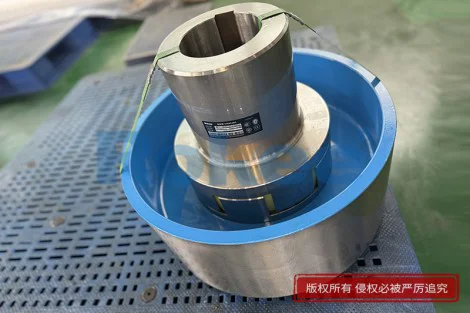
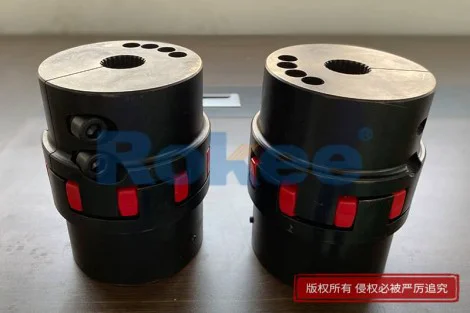
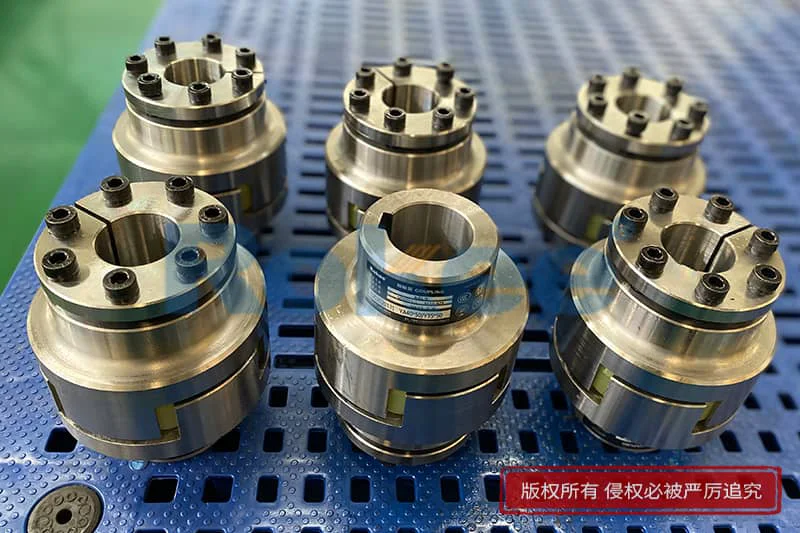
The basic structural composition of flexible spider shaft coupling is simple and compact, mainly including two symmetrical metal hubs and a central elastic spider element, which constitutes the core three-part transmission structure. The two metal hubs are respectively installed and fixed on the driving shaft and driven shaft of the equipment. The outer side of each hub is designed with evenly distributed claw structures, which are arranged in a regular radial pattern and form a meshing space with the central elastic spider. The spider element, usually presented in a multi-lobed star shape, is clamped and embedded between the claws of the two hubs, forming a non-rigid connection structure without hard contact between metal parts. This unique assembly structure abandons the integral rigid connection mode, and relies on the elastic deformation of the intermediate elastomer to complete power transmission, which lays a structural foundation for its flexible working performance. The hub body is processed with precise shaft holes, which can be stably matched with different shaft diameters through keyway positioning, locking fasteners or clamping structures, ensuring no relative sliding between the coupling and the shaft during high-speed operation and avoiding power loss caused by shaft rotation deviation.
The core working principle of flexible spider coupling lies in the elastic torque transmission and multi-dimensional misalignment compensation realized by the deformation of the elastomer. When the equipment starts to operate, the driving shaft drives the active hub to rotate synchronously. The radial claws of the active hub squeeze the lobed parts of the intermediate elastic spider, and the torque is transmitted to the driven hub through the slight torsional and compressive deformation of the elastomer, thereby driving the driven shaft to rotate and complete power transmission. In this process, the elastic spider does not produce rigid friction or hard collision with the hub claws. All power transmission is completed through controllable elastic deformation, which fundamentally avoids the rigid impact generated during the start-up, operation and load fluctuation of traditional rigid transmission structures. More importantly, the flexible characteristics of the intermediate elastomer can effectively adapt to various minor misalignment states between the driving and driven shafts that are inevitable in actual equipment operation. In mechanical assembly and long-term operation, shaft misalignment caused by processing errors, assembly deviations, equipment vibration and component wear is unavoidable, and flexible spider shaft couplings can well tolerate these deviations through different forms of elastic deformation.
For common shaft misalignment states in industrial scenarios, the flexible spider shaft coupling has targeted adaptive compensation capabilities. When radial misalignment occurs between the two shafts, the lateral compression and rebound deformation of the spider elastomer can absorb the tiny radial offset of the shafts, preventing additional radial stress from acting on the shaft and bearing components. When angular misalignment exists, the multi-lobed elastic structure of the spider allows a small-angle deflection between the two hubs, which adapts to the inclination deviation of the shaft center and eliminates the shear stress caused by angular dislocation. In terms of axial displacement, the reserved assembly gap and the elastic stretching performance of the spider can tolerate the tiny axial expansion and contraction of the shaft caused by equipment operation temperature changes and mechanical vibration, avoiding axial extrusion damage between components. This multi-dimensional misalignment compensation capability enables the coupling to maintain stable transmission performance even when the equipment assembly precision is not absolutely perfect and the operating state is dynamically changed, greatly reducing the failure rate of transmission systems caused by shaft misalignment.
The performance of flexible spider shaft coupling is largely determined by the material characteristics of the intermediate elastic spider element, and the selection of elastomer materials directly affects the coupling’s vibration damping effect, wear resistance, temperature adaptability and service life. At present, the mainstream elastic materials used for spider elements include high-performance polyurethane, nitrile rubber and modified natural rubber compounds, each with differentiated performance advantages to adapt to diverse working conditions. Polyurethane materials have excellent wear resistance, high tensile strength and good toughness, and can maintain stable elastic performance under long-term high-speed operation and frequent load changes. They are not easy to produce permanent deformation, and are suitable for most conventional industrial transmission scenarios. Nitrile rubber materials have outstanding oil resistance and low-temperature resistance, and can work stably in oily working environments and low-temperature operating conditions, with strong resistance to medium corrosion. Modified natural rubber has excellent vibration absorption and buffering performance, which can efficiently absorb high-frequency vibration and instantaneous impact load, and is more suitable for equipment scenarios with strict requirements for vibration and noise reduction.
Compared with other types of flexible couplings, flexible spider shaft couplings have obvious comprehensive performance advantages in structural design and actual use. First of all, its overall structure is compact and lightweight, with a small installation space occupation, which is very suitable for precision mechanical equipment and integrated compact transmission systems with limited installation space. Secondly, the transmission response is sensitive and stable. The elastic deformation of the spider is uniform and controllable during operation, which will not cause torque fluctuation or transmission delay, and can realize synchronous and efficient power transmission while ensuring flexibility. In addition, this coupling has excellent vibration damping and noise reduction capabilities. The elastomer can absorb most of the high-frequency vibration and mechanical impact generated during equipment operation, block the transmission of vibration between the driving and driven shafts, reduce the resonance phenomenon of the whole machine, and effectively lower the operating noise of the equipment. For mechanical equipment that runs continuously for a long time, this vibration damping performance can greatly reduce the fatigue wear of bearings, gears and other precision components, and improve the overall operating stability of the equipment.
Maintenance-free operation is another prominent advantage of flexible spider shaft couplings, which brings extremely high cost performance and operational convenience to industrial production. The whole coupling structure has no sliding friction parts and no metal-to-metal hard contact during operation, so there is no need to add lubricating grease or regular oil maintenance in the daily use process. Different from gear couplings and chain couplings that are prone to wear, rust and lubrication failure, flexible spider shaft couplings can maintain long-term stable operation with almost no manual maintenance after correct installation and debugging. This not only saves a lot of daily maintenance time and labor costs for enterprises, but also avoids equipment shutdown failures caused by improper maintenance, effectively improving the continuous operation rate of production lines. Meanwhile, the replacement of vulnerable parts is extremely convenient. When the elastic spider is aged or worn after long-term use, users only need to disassemble the two hubs slightly to replace the intermediate elastomer, without replacing the whole coupling, which greatly reduces the later use cost.
Flexible spider shaft couplings have extremely wide industrial applicability, covering almost all conventional mechanical transmission scenarios that require flexible connection and vibration reduction. In fluid power equipment such as water pumps and fans, the coupling can absorb the vibration generated by the high-speed rotation of impellers and fan blades, avoid the vibration conduction between the motor and the equipment body, reduce the operating noise of fluid equipment, and protect the sealing structure and bearing components of the pump body from vibration damage. In material conveying systems widely used in mining, building materials, logistics and food processing industries, the coupling adapts to the intermittent load and impact load generated during the operation of conveying equipment, buffers the instantaneous torque impact during equipment start-up and stop, and ensures the stable operation of the conveying system. In automated precision machinery and linear motion equipment, its compact structure and precise transmission performance ensure the positioning accuracy and operation stability of precision transmission components, avoiding transmission errors caused by shaft misalignment.
In power transmission equipment such as compressors and reducers, flexible spider shaft couplings can effectively balance the torque output of power components and load components, absorb the pressure impact generated during gas compression and mechanical deceleration, and reduce the operating load of the reducer and compressor host. In addition, in light industrial machinery, packaging equipment and small and medium-sized mechanical transmission devices, this coupling has become the preferred connecting component due to its low cost, easy installation and stable performance. Whether it is continuous high-speed operation, intermittent variable load operation, or conventional constant-speed stable operation scenarios, flexible spider shaft couplings can adjust their flexible deformation state according to different working conditions to adapt to diverse transmission needs, showing strong working condition compatibility.
The installation and commissioning process of flexible spider shaft coupling is simple and standardized, with low technical threshold for operation, which is also an important reason for its wide popularization and application. Before installation, it is only necessary to clean the matching surfaces of the driving and driven shafts, check the dimensional accuracy of the shaft holes and the integrity of the spider elastomer to ensure no damage, aging or deformation of the components. During installation, the two hubs are respectively fixed on the two shafts, and the elastic spider is clamped in the middle of the hub claws. After preliminarily adjusting the shaft alignment state, the locking fasteners are tightened to complete the installation. In the commissioning stage, manual rotation and no-load test operation can be carried out to check whether there is jamming, abnormal friction and obvious vibration during operation. After confirming that the transmission is smooth, the equipment can be put into formal load operation. The simple installation process shortens the equipment assembly cycle and reduces the assembly error rate, which is conducive to improving the overall assembly efficiency of mechanical equipment.
In terms of service life and operational reliability, the performance of flexible spider shaft couplings is closely related to the material selection and actual working conditions. Under normal temperature, conventional load and clean working environment, the high-quality elastomer spider can maintain stable performance for a long time, with low wear rate and no easy aging failure. In harsh working environments such as high temperature, low temperature, humidity and oil pollution, by selecting matching high-temperature resistant, low-temperature resistant and corrosion-resistant elastomer materials, the coupling can also maintain good working performance and adapt to the complex environmental conditions of industrial sites. Different from rigid couplings that are prone to shaft breakage and component cracking under impact load, the flexible structure of the spider coupling can play a good overload protection role. When the equipment is overloaded instantaneously, the elastomer will produce large deformation to buffer the overload torque, avoid the direct action of excessive torque on the shaft and power components, and protect the core mechanical parts from damage, which greatly improves the safety of equipment operation.
With the continuous upgrading of modern industrial machinery towards high speed, high precision and high stability, the market demand for flexible spider shaft couplings is also constantly improving, and the product performance is also continuously optimized and iterated. On the basis of maintaining the original compact structure and flexible transmission advantages, the optimized products further improve the material toughness and fatigue resistance of the elastomer, enhance the torque transmission capacity and high-speed operation stability, and adapt to the higher power and higher speed transmission scenarios of modern mechanical equipment. At the same time, the structural design is more refined, the matching precision between the hub and the shaft is further improved, the transmission error is reduced, and the overall operational stability of the equipment is optimized. As a basic and versatile mechanical component, flexible spider shaft coupling does not have complex structural design and high manufacturing cost, but it undertakes the key tasks of power transmission, vibration reduction, misalignment compensation and equipment protection in the mechanical system, which is an indispensable key link to ensure the healthy operation of mechanical transmission systems.
In conclusion, flexible spider shaft coupling integrates the advantages of simple structure, convenient installation, maintenance-free operation, excellent vibration damping and multi-dimensional misalignment compensation. It can effectively solve various unstable problems in the process of mechanical power transmission, protect precision mechanical components, reduce equipment operating noise and failure rate, and extend the overall service life of mechanical equipment. Its strong adaptability to working conditions and high cost performance make it widely used in various industrial mechanical transmission fields. In the future, with the continuous development of industrial manufacturing technology and the continuous improvement of equipment operation requirements, flexible spider shaft couplings will continue to rely on material innovation and structural optimization to adapt to more high-end and complex working scenarios, and continue to play an important basic supporting role in the field of mechanical transmission.
« Flexible Spider Shaft Coupling » Update Date: 2026/7/17
Contact
If you require custom machined couplings, please contact Rokee via the contact information below for inquiries.
Email: https://www.gshmdpq.com
 WeChat