Tooth Couplings Working Principle
In the vast landscape of mechanical power transmission systems, tooth couplings stand out as a highly reliable and versatile component, engineered to bridge two rotating shafts, transfer torque efficiently, and accommodate unavoidable misalignments that arise during operational use. Unlike rigid couplings that demand perfect shaft alignment and offer no flexibility for positional deviations, tooth couplings blend the strength of rigid torque transmission with the adaptability of flexible connections, making them indispensable across heavy-duty industrial sectors, light-duty machinery, and precision-driven mechanical setups alike. Their enduring popularity stems from a meticulously designed working principle rooted in gear meshing mechanics, material science, and kinematic engineering, which enables them to handle high torque loads, resist shock and vibration, and maintain consistent performance even in challenging operating environments.
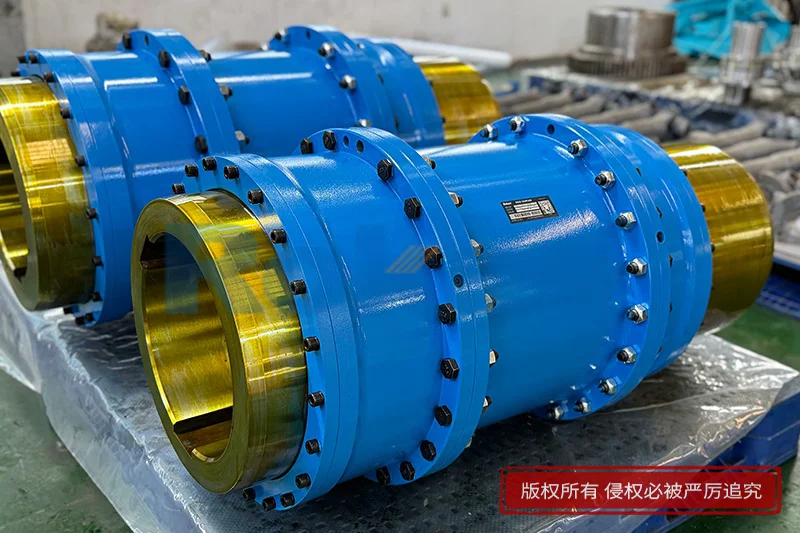
At the heart of every tooth coupling lies a symmetrical, modular structure built around two primary meshing components: external gear hubs and internal gear sleeves, complemented by auxiliary parts that enhance stability, sealing, and ease of installation. Each external gear hub is precision-machined with a set of uniformly spaced, profiled outer teeth, designed to attach securely to the end of a rotating shaft via keyways, interference fits, or other standard shaft-hub connection methods; one hub connects to the driving shaft, while the other links to the driven shaft, creating two distinct half-coupling units. The internal gear sleeve, a cylindrical component with precision-cut inner teeth that match the tooth count and profile of the external hubs, serves as the connecting bridge between the two external gear hubs, enclosing the meshing teeth and forming a closed transmission chamber. This core assembly is often paired with sealing elements—such as gaskets, O-rings, or labyrinth seals—that encase the meshing gear surfaces, preventing lubricant leakage and blocking the ingress of dust, debris, moisture, and other contaminants that could accelerate wear or compromise meshing integrity. Fasteners, typically high-strength bolts or clamps, are used to secure the internal sleeve and external hubs in proper alignment during assembly, ensuring the gear teeth maintain consistent contact without excessive play or binding under load. Every structural element is crafted to work in harmony, with tight manufacturing tolerances for tooth profiles, pitch diameters, and surface finishes to guarantee seamless meshing and optimal power transfer.
The fundamental working principle of a tooth coupling revolves around positive gear meshing, a mechanical interaction that transmits rotational motion and torque from the driving shaft to the driven shaft with minimal energy loss and zero slippage, a stark contrast to friction-based couplings that rely on surface friction for power transfer. When the driving shaft is set into motion by a prime mover—such as an electric motor, engine, or turbine—the rotational force is transferred directly to the attached external gear hub, causing the hub and its outer teeth to rotate at the same speed as the driving shaft. As the outer teeth of the driving hub engage with the inner teeth of the central sleeve, the meshing contact between the tooth flanks creates a rigid mechanical link that transfers torque across the gear interface; the rotational energy is then passed from the driving hub to the internal sleeve, which in turn transmits the motion and torque to the second external gear hub connected to the driven shaft. This sequential meshing and force transfer process ensures that the driven shaft rotates in perfect synchrony with the driving shaft, maintaining a constant speed ratio and delivering torque smoothly across the connection. The key to this efficient transmission is the full-face contact between the meshing teeth, which distributes the applied torque evenly across multiple tooth flanks simultaneously, rather than concentrating stress on a single point or surface. Even under heavy, fluctuating, or shock-induced torque loads, this distributed contact minimizes localized stress, prevents tooth deformation or fracture, and preserves the coupling’s structural integrity throughout extended operation.
One of the most defining attributes of tooth couplings, and a cornerstone of their working principle, is their ability to compensate for three primary types of shaft misalignment: angular misalignment, radial misalignment, and axial misalignment. In real-world industrial applications, perfect shaft alignment is nearly impossible to achieve and maintain; thermal expansion of shafting and machinery components, foundation settling, mechanical wear, and operational vibration all cause subtle shifts in shaft position, which can lead to excessive stress, premature bearing failure, and system breakdown if unaddressed. Tooth couplings are purpose-built to mitigate these issues through the inherent design of their meshing gear teeth and controlled clearances between mating surfaces, allowing for limited relative movement between the driving and driven shafts without disrupting torque transmission or causing mechanical damage. Angular misalignment occurs when the centerlines of the two shafts intersect at a small angle rather than being collinear; radial misalignment refers to a parallel offset between the two shaft centerlines, with no angular deviation; and axial misalignment involves a slight back-and-forth movement of the shafts along their longitudinal centerlines. Unlike basic flexible couplings that may only address one or two types of misalignment, tooth couplings are engineered to accommodate all three simultaneously, thanks to the dynamic sliding and pivoting action of the meshing gear teeth as they adjust to positional shifts.
To understand how misalignment compensation is integrated into the working principle, it is critical to distinguish between the two primary tooth profile designs used in tooth couplings: straight tooth profiles and crowned (drum) tooth profiles, each offering distinct compensation capabilities and performance traits. Straight tooth couplings feature external teeth with a cylindrical, linear profile, where the tooth flanks run parallel to the shaft axis. These couplings rely on increased backlash—controlled clearance between meshing teeth—to accommodate small degrees of misalignment, with the tooth flanks sliding axially and radially relative to one another as the shafts shift. While effective for minor misalignments in low-load, low-speed applications, straight tooth designs have limitations: the linear tooth profile creates edge contact under angular misalignment, concentrating stress on the tooth tips and roots, increasing wear rates, and restricting the maximum allowable misalignment angle. Crowned tooth couplings, by contrast, feature external teeth with a curved, spherical profile, where the tooth surface is machined to form a gentle drum shape with the center of curvature aligned with the shaft axis. This crowned design eliminates edge contact entirely, even under significant angular misalignment, maintaining full-face tooth contact across the entire meshing surface. The curved profile allows for greater relative pivoting and sliding between the internal and external teeth, enabling the coupling to handle much larger angular, radial, and axial misalignments than straight tooth variants. The crowned tooth design also distributes stress more evenly across the tooth flank, reducing wear, minimizing friction losses, and extending the service life of the coupling, making it the preferred choice for heavy-duty, high-speed, and high-misalignment applications.
The dynamic interaction between meshing teeth during torque transmission and misalignment compensation generates unavoidable friction and heat, making lubrication a non-negotiable element of the tooth coupling’s working principle and long-term functionality. As the external and internal teeth slide and pivot against one another—especially under misaligned conditions—frictional forces act on the tooth flanks, generating heat that can elevate operating temperatures, accelerate material wear, and degrade surface finishes if left unmanaged. Proper lubrication creates a thin, durable fluid film between the mating tooth surfaces, separating the metal contact points to reduce friction, minimize heat generation, and prevent abrasive wear, scuffing, and galling. The choice of lubricant depends on the coupling’s operating speed, load capacity, temperature range, and environmental conditions; grease lubrication is commonly used for low-speed, moderate-load applications, offering ease of application and long-lasting lubrication with minimal maintenance, while oil lubrication—either splash-fed or forced-circulation—is preferred for high-speed, heavy-duty setups, as it provides superior heat dissipation and consistent lubrication across high-contact gear surfaces. The sealing system, which works in tandem with lubrication, preserves the lubricant within the meshing chamber and blocks external contaminants, ensuring the lubricant retains its viscosity and protective properties. A compromised seal leads to lubricant leakage or contamination, disrupting the fluid film, increasing friction, and causing premature tooth wear; thus, the sealing mechanism is integral to sustaining the coupling’s working efficiency and operational lifespan.
Beyond core torque transmission and misalignment compensation, the working principle of tooth couplings extends to their ability to dampen minor mechanical vibrations and absorb transient shock loads, enhancing the stability of the entire power transmission system. In industrial machinery, sudden load spikes, startup shocks, and operational vibration are common, and these forces can propagate through shafting to damage sensitive components, increase noise levels, and disrupt system performance. The meshing gear teeth of a tooth coupling act as a buffer, absorbing and dissipating minor vibrational energy and shock forces across the multiple contact points of the tooth flanks, preventing these stresses from transferring to the driving and driven equipment. While tooth couplings are not classified as highly elastic damping elements like elastomeric couplings, their rigid yet flexible meshing design provides a balanced blend of stiffness and shock absorption, making them suitable for applications where steady torque transmission and moderate vibration damping are both required. This dual functionality ensures that the coupling not only transfers power reliably but also protects connected machinery from unnecessary stress, reducing maintenance needs and extending the service life of the entire drive system.
The operational efficiency of tooth couplings is deeply intertwined with their design optimization, which aligns the working principle with specific application requirements to maximize performance and durability. Key design considerations include tooth count, module size, face width, material selection, and surface hardness, all of which are tailored to the anticipated torque load, operating speed, misalignment magnitude, and environmental conditions. Larger tooth modules and wider face widths increase torque-carrying capacity, making the coupling suitable for heavy machinery such as conveyors, crushers, rolling mills, and marine propulsion systems; smaller, finer tooth profiles are ideal for precision equipment, pumps, fans, and light-duty industrial drives where compact size and smooth operation are prioritized. Material selection is equally critical: high-grade alloy steels are commonly used for gear components due to their high tensile strength, wear resistance, and toughness, enabling the teeth to withstand heavy loads and repeated stress without deformation or failure. Surface hardening treatments—such as carburizing, nitriding, or induction hardening—further enhance tooth durability, creating a hard, wear-resistant outer layer while maintaining a tough, ductile core that resists impact damage. These design choices are not arbitrary; they are engineered to reinforce the core working principle of the tooth coupling, ensuring that gear meshing remains efficient, misalignment compensation remains effective, and performance remains consistent under diverse operating conditions.
Proper installation and routine maintenance are also essential to uphold the intended working principle of tooth couplings, as misassembly or neglect can impair functionality and lead to premature failure. During installation, technicians must ensure the coupling components are aligned within the specified misalignment limits, fasteners are tightened to the correct torque specifications, and the sealing system is intact to prevent lubricant loss. Over-tightening can cause binding and excessive tooth stress, while insufficient tightening can lead to component movement and meshing instability. Regular maintenance practices include inspecting seals for damage, replenishing or replacing lubricant as needed, checking for tooth wear, pitting, or scoring, and verifying that shaft alignment remains within acceptable ranges over time. Addressing minor issues promptly—such as replacing worn seals or replenishing degraded lubricant—prevents small problems from escalating into major failures, ensuring the coupling continues to operate according to its designed working principle. Even the most well-designed tooth coupling will underperform or fail prematurely without proper installation and maintenance, highlighting the symbiotic relationship between design, operation, and upkeep in sustaining optimal functionality.
In summary, the working principle of tooth couplings is a sophisticated integration of gear meshing mechanics, flexible kinematics, material engineering, and lubrication science, all working in unison to deliver reliable torque transmission and misalignment compensation. From the initial transfer of rotational force from the driving shaft to the external gear hub, through the meshing of internal and external teeth that carries torque across the coupling, to the adaptive movement of teeth that accommodates shaft misalignment and dampens vibration, every aspect of the coupling’s operation is purposefully engineered. The distinction between straight and crowned tooth profiles further refines this principle, tailoring performance to match the demands of specific applications, while lubrication and sealing systems preserve functionality and extend service life. Unlike simpler coupling designs, tooth couplings strike a unique balance between rigidity and flexibility, making them a staple in power transmission systems where durability, efficiency, and adaptability are paramount. As mechanical engineering continues to evolve, the fundamental working principle of tooth couplings remains a benchmark for reliable shaft connection, with ongoing design refinements only enhancing their ability to meet the ever-growing demands of modern industrial and mechanical systems. Their enduring relevance is a testament to the elegance and effectiveness of their core operating logic, proving that precision-engineered gear meshing will continue to be a cornerstone of power transmission technology for years to come.
Tags: Tooth Couplings , Tooth Gear Couplings , Gear Tooth Couplings , Curved Tooth Couplings , Curved Tooth Gear Couplings , Toothed Couplings , Crowned Tooth Gear Couplings , sandwich panel machine , pu sandwich panel line
« Tooth Couplings Working Principle » Update Date: 2026/7/15
Contact
If you require custom machined couplings, please contact Rokee via the contact information below for inquiries.
Email: https://www.gshmdpq.com
 WeChat
Industrial Couplings
You may also like
- Tyre Coupling Gap Chart
- Working Principle of Flexible Membrane Coupling
- Universal Coupling Joint Uses
- Universal Joint Shaft Coupling Schematic Diagram
- Cross Cardan Shafts 3D Model
- Working Principle of Bush Pin Type Flexible Coupling
- Universal Couplings Size Chart
- Types of Spline Gear Couplings
- Diaphragm Coupling Types
- Universal Cross Joint Coupling Size Chart